
Guides · For federations, companies and public authorities
Organising a panel discussion
A panel discussion brings three to five experts with different perspectives together on stage. A moderator guides the conversation, and the audience listens and asks questions at the end. Panels are part of specialist conferences, association events and anniversaries, often as the close of a programme. This guide shows how to choose the key question and the panellists, prepare the moderation, plan the running order and set up the stage and technology so that every voice is heard in the room and on the livestream.
The key question
A good panel has a key question to which there are several defensible answers. “How can the energy transition succeed in the building stock?” sustains a discussion, “The energy transition” does not. Phrase the question so that the audience recognises itself in it, and put it in the invitation and the programme.
How the panel fits into a whole conference is explained in the guide Planning a conference or congress.
Choosing the panellists
- Three to five panellists. With more, each has too little speaking time.
- Different positions and experiences, for example from practice, research, public administration and those affected.
- A balanced line-up, so that the panel does not seem one-sided.
- Ask early: sought-after panellists plan three to six months ahead.
Two to three weeks beforehand, send all panellists a briefing with the key question, running order, speaking time, the other panellists and the audience. Ask whether they will start with a short opening statement and whether they agree to recording and livestreaming.
Moderation
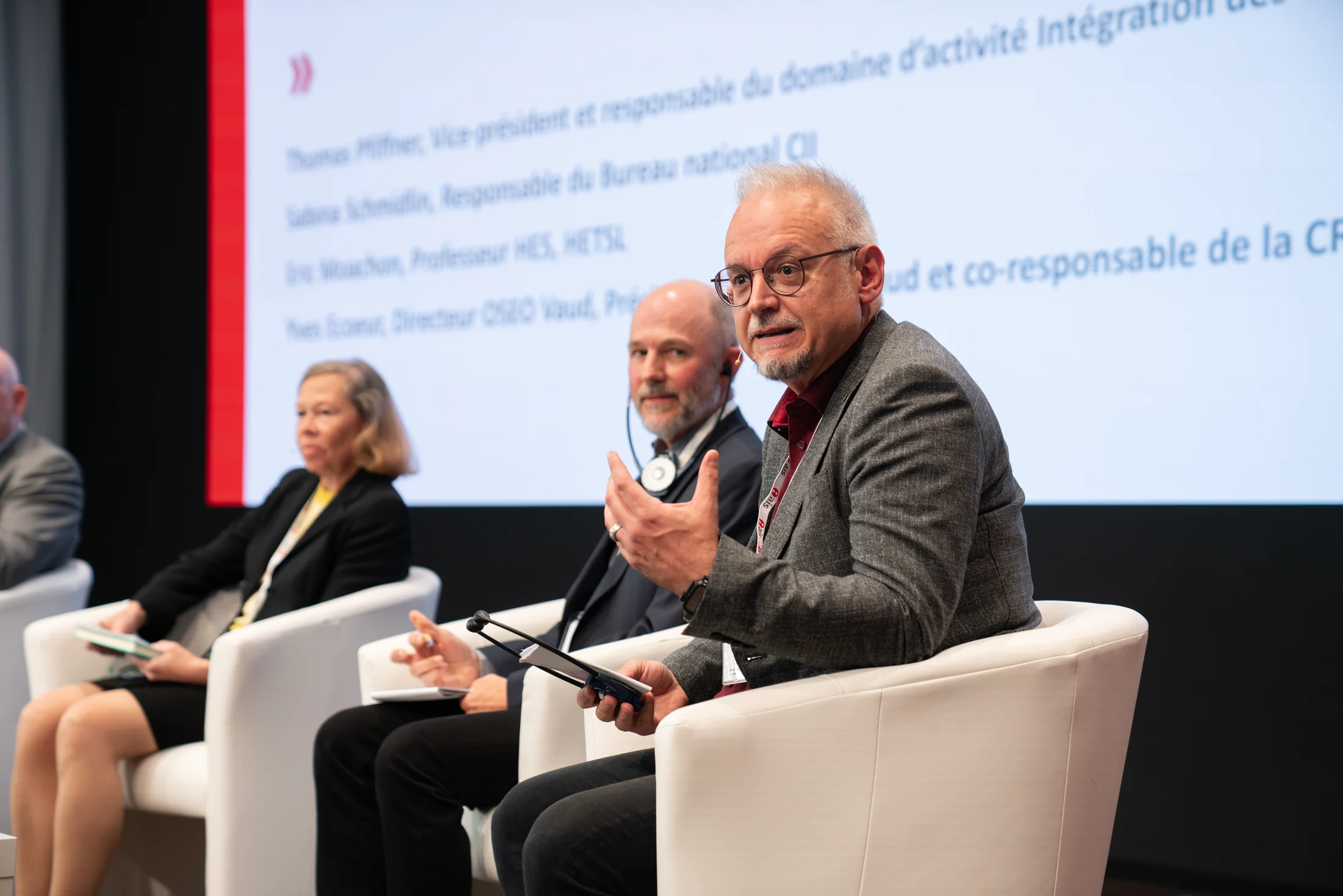
The moderator introduces the panellists, keeps an eye on the time and follows up when someone evades a question. They share out speaking time fairly, summarise along the way and remain neutral themselves.
Prepare a list of questions with them. Good questions are open and specific, for example “What would you do differently tomorrow?”, rather than general.
- an opening question for everyone
- three to four follow-up questions
- a closing question, one sentence per panellist
Running order with timings
Example for a 60-minute panel. A panel usually lasts 45 to 90 minutes; beyond that, panellists and audience rarely stay focused.
Minute 0
Welcome, key question, introduction of the panellists
Minute 5
Opening statements, two minutes each
Minute 15
Discussion with the moderator’s follow-up questions
Minute 40
Questions from the audience, on site and online
Minute 55
Closing round, one sentence per panellist
Minute 60
Thanks and move on to the apéro
Questions from the audience
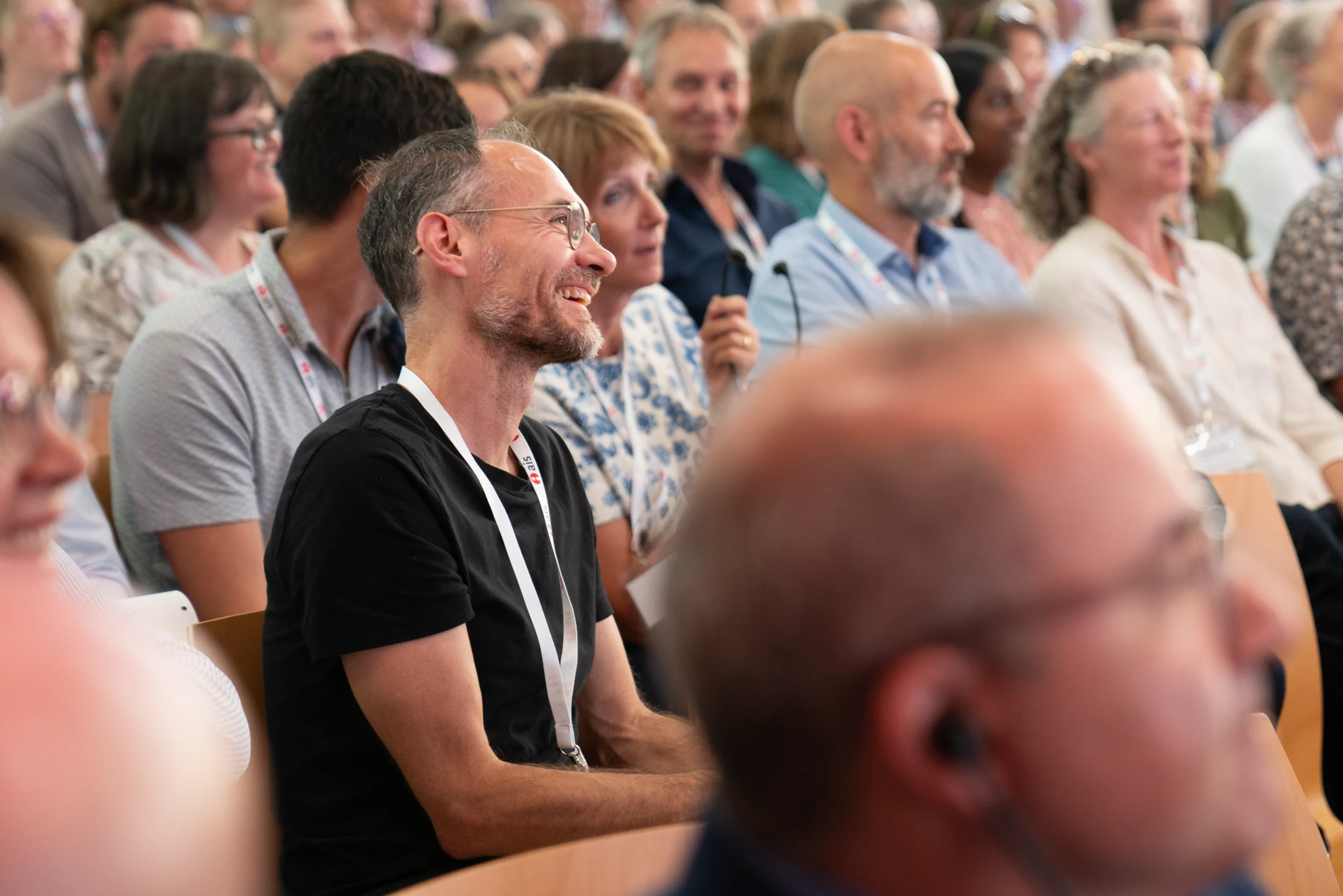
- Two handheld microphones in the room, brought round by helpers. Nobody on the livestream can understand questions asked without a microphone.
- Question cards or a digital question tool, if many questions are expected or anonymity matters.
- A second person collects questions from the livestream and passes them on to the moderator.
- Announce the question round at the start, so that questions come together earlier.
Stage and seating
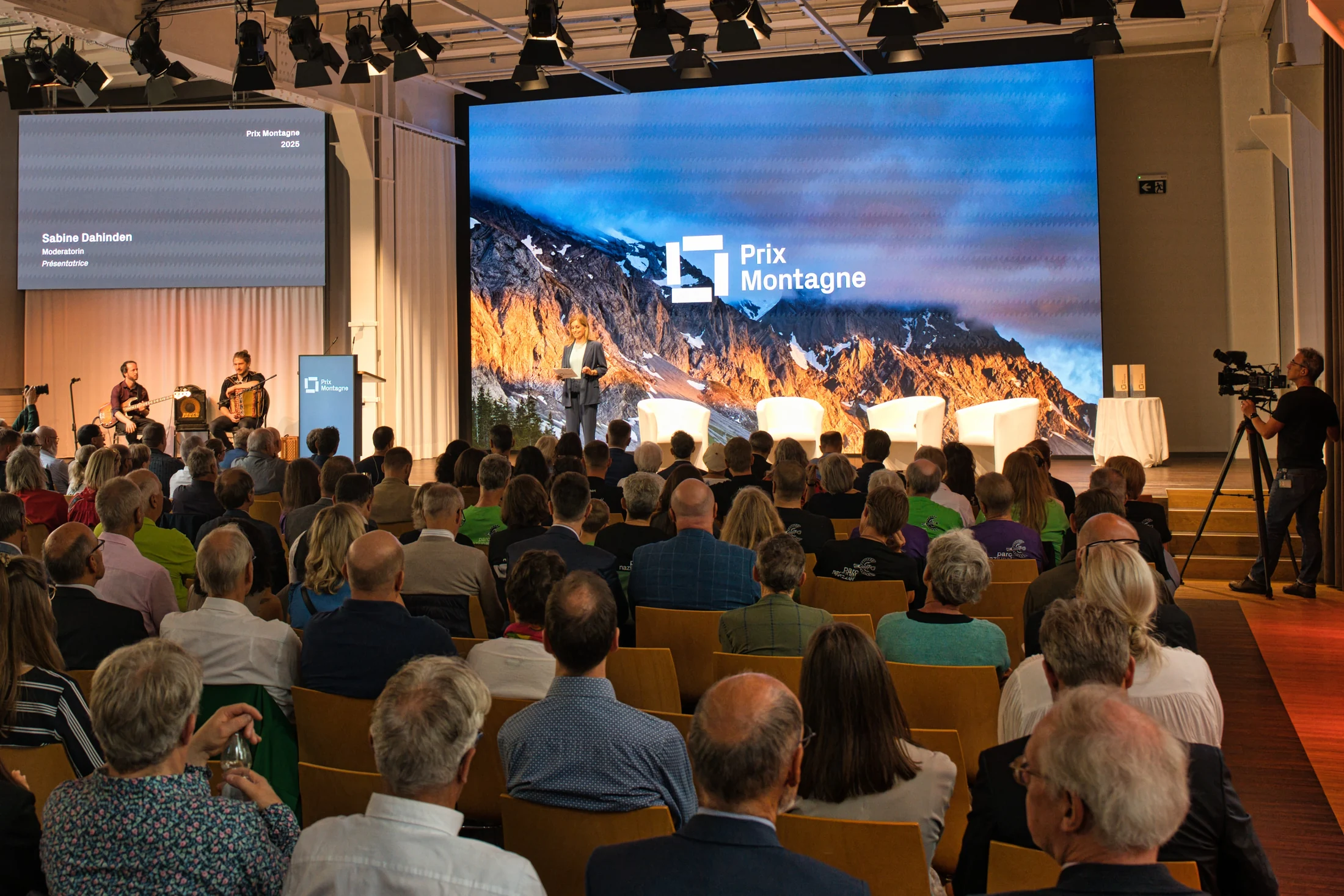
Seat the panellists in a slight semicircle, with the moderator at the side so they can see everyone. Armchairs or high chairs with small tables for water look calmer than a long table. Theatre style facing the stage suits the audience. From around 100 people, the panel should be on a raised stage so that the back rows can also see the panellists.
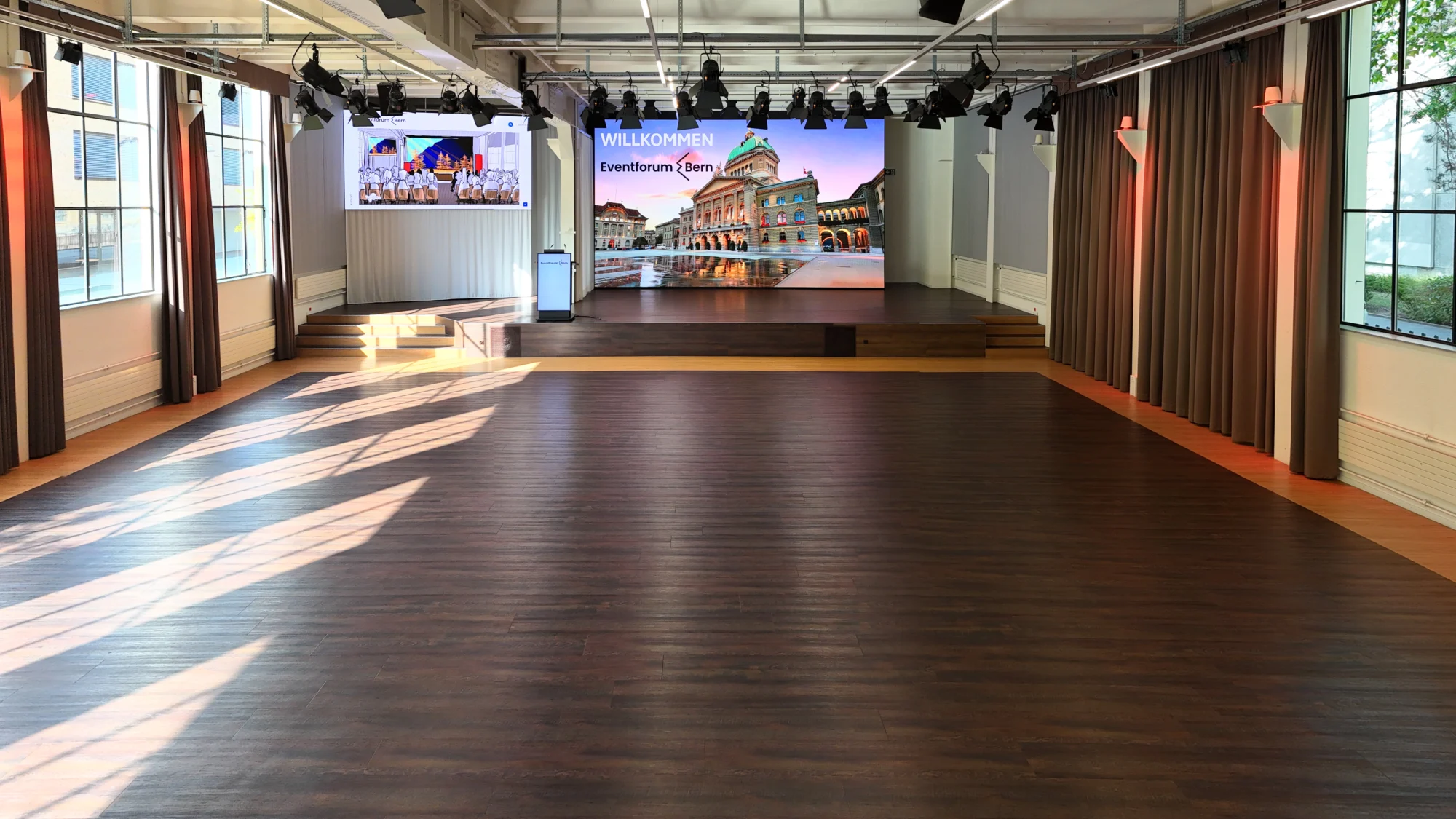
At Eventforum Bern, the stage in the event hall is permanently installed and lit, with seating for up to 380 people theatre style. Risers of various heights with connections for microphones and lecterns are available (furniture).
Seating styles at a glance ↗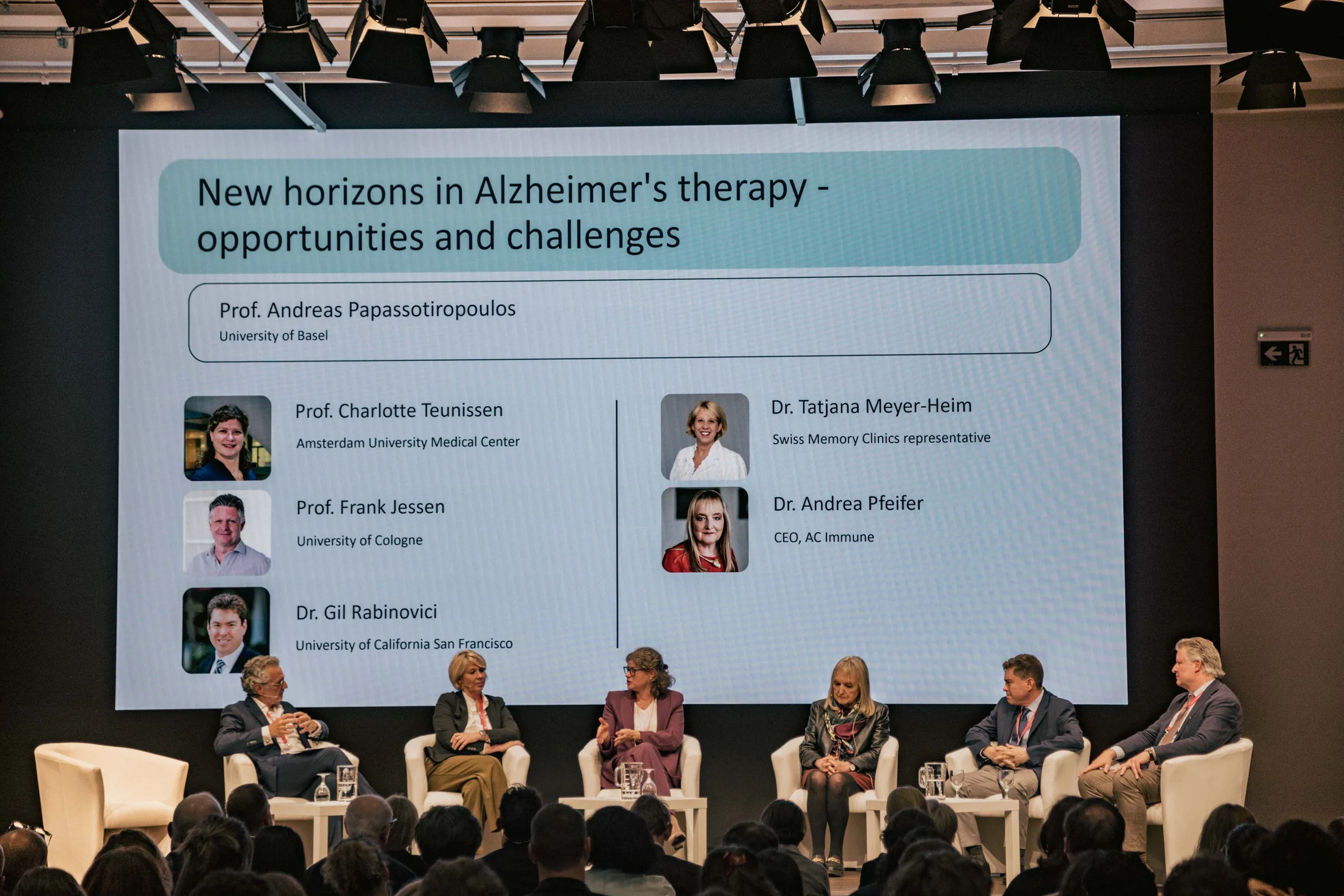
Technology
- One microphone per panellist and one for the moderator. Headsets leave the hands free, handheld microphones are more robust when speakers change often.
- The image of whoever is speaking on a large screen so that the audience can see facial expressions, together with each panellist’s name and role.
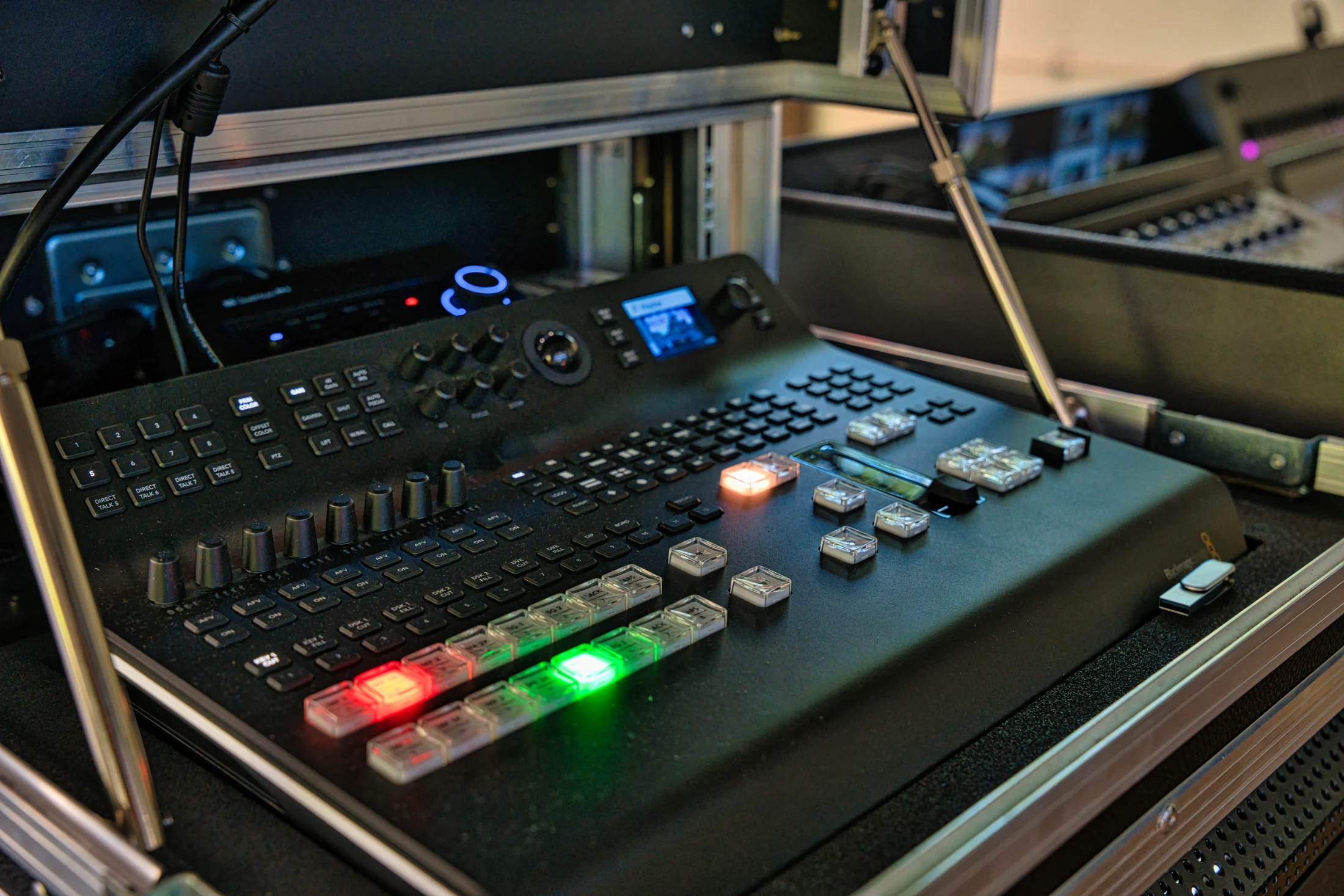
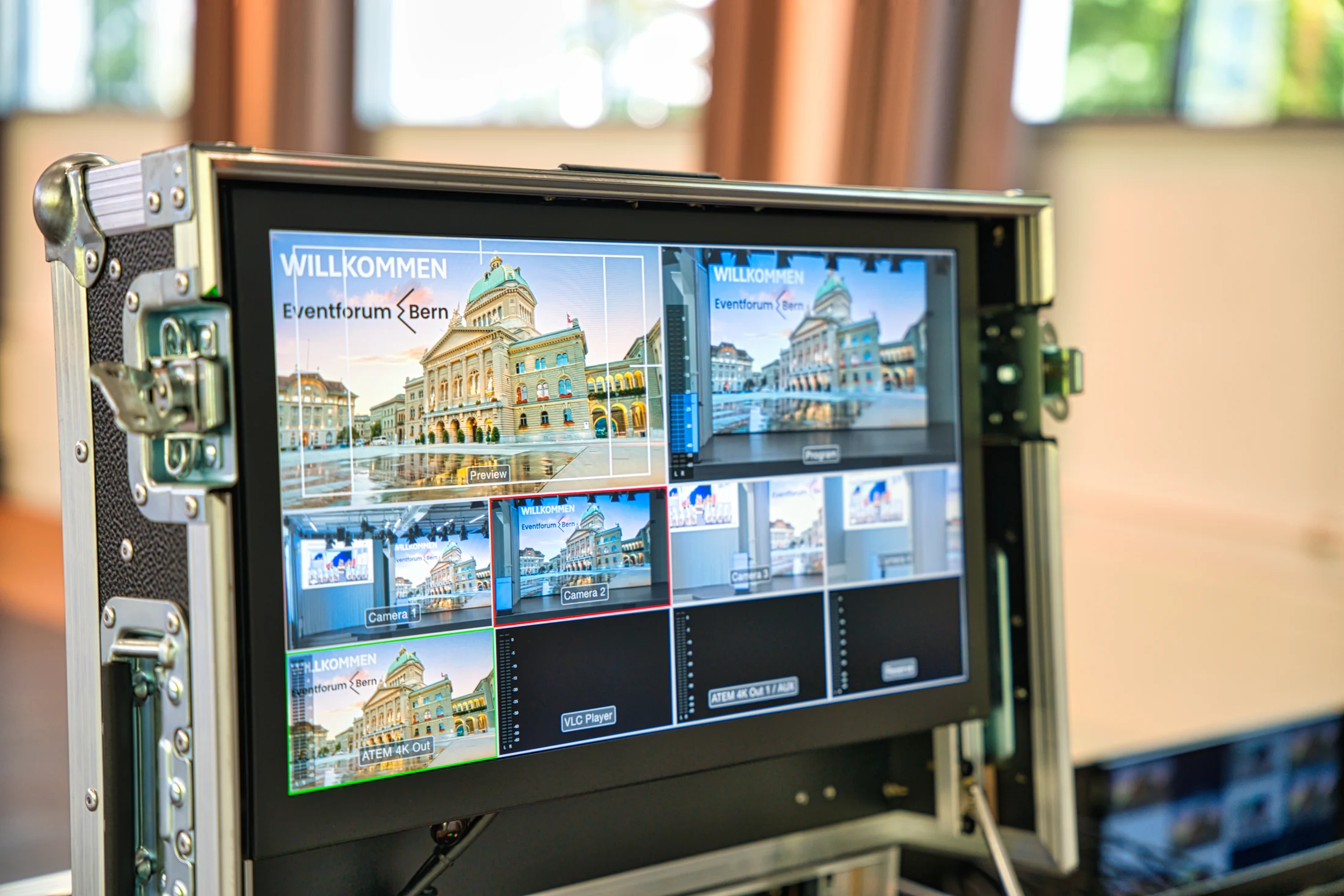
- Cameras and sound for livestreaming and recording, if the panel is to be available later.
- A sound check with all panellists before the doors open.
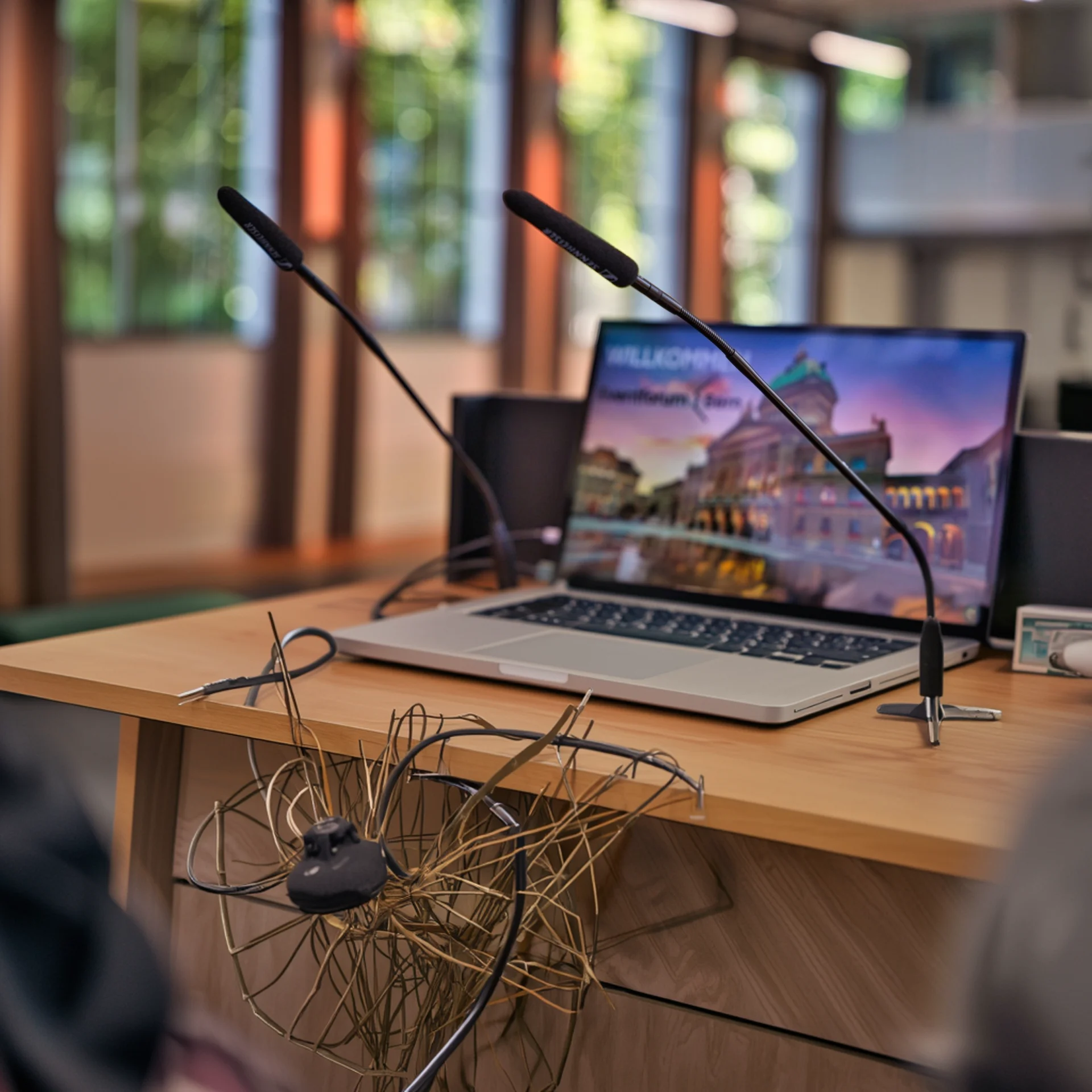
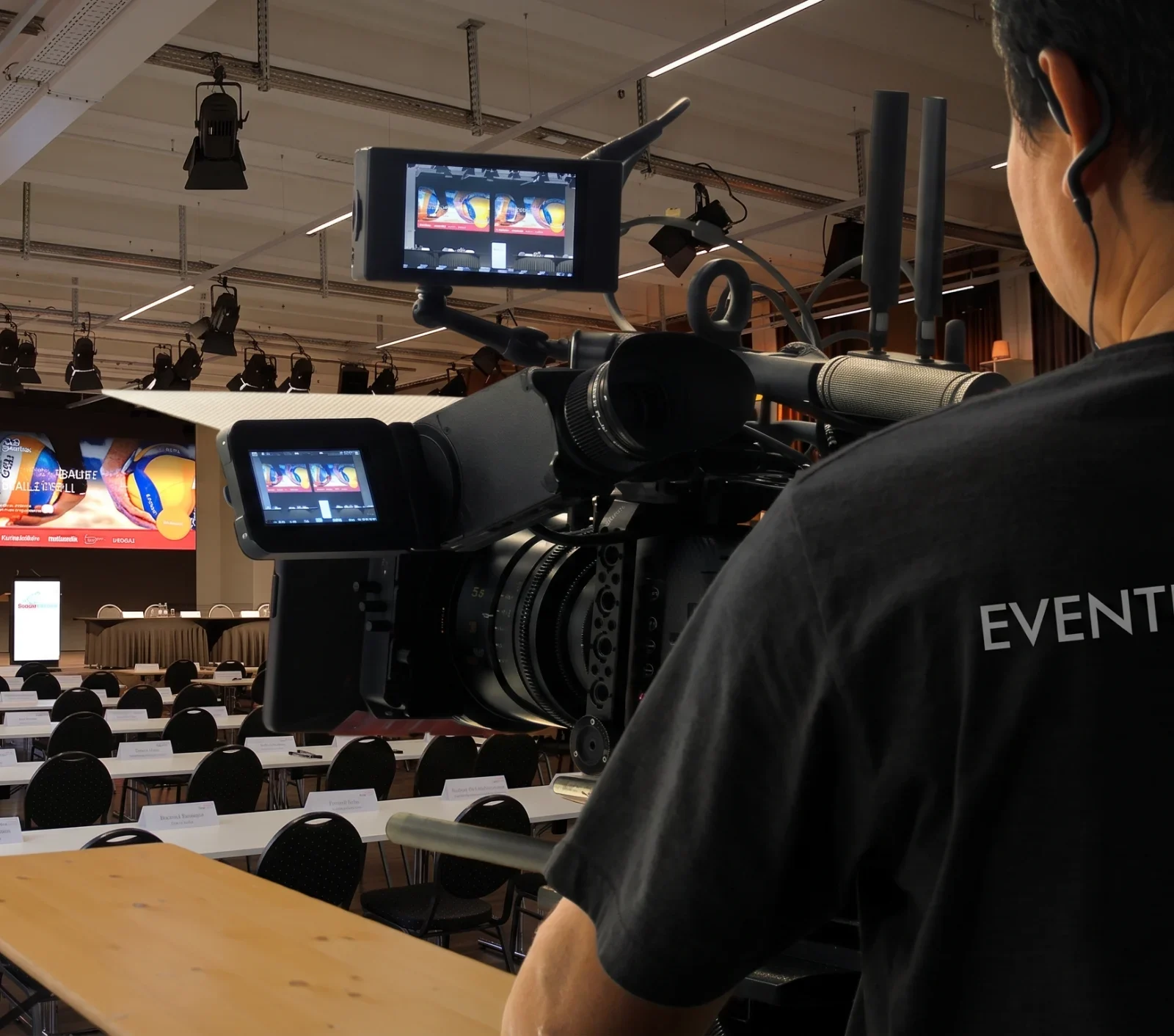
At Eventforum Bern, headsets, handheld and gooseneck microphones are available, and the sound system is designed for the full hall. Fixed cameras are aimed at the stage and lectern; their image goes to the two 4K LED walls or, on request, to the livestream. The Eventforum’s technical team looks after the event.
Event technology ↗Multilingual panels
When panellists from German- and French-speaking Switzerland debate, simultaneous interpreting helps: each person speaks in their own language and the audience listens via receivers. For lively discussions and Swiss German on stage, a team of interpreters is the right choice.
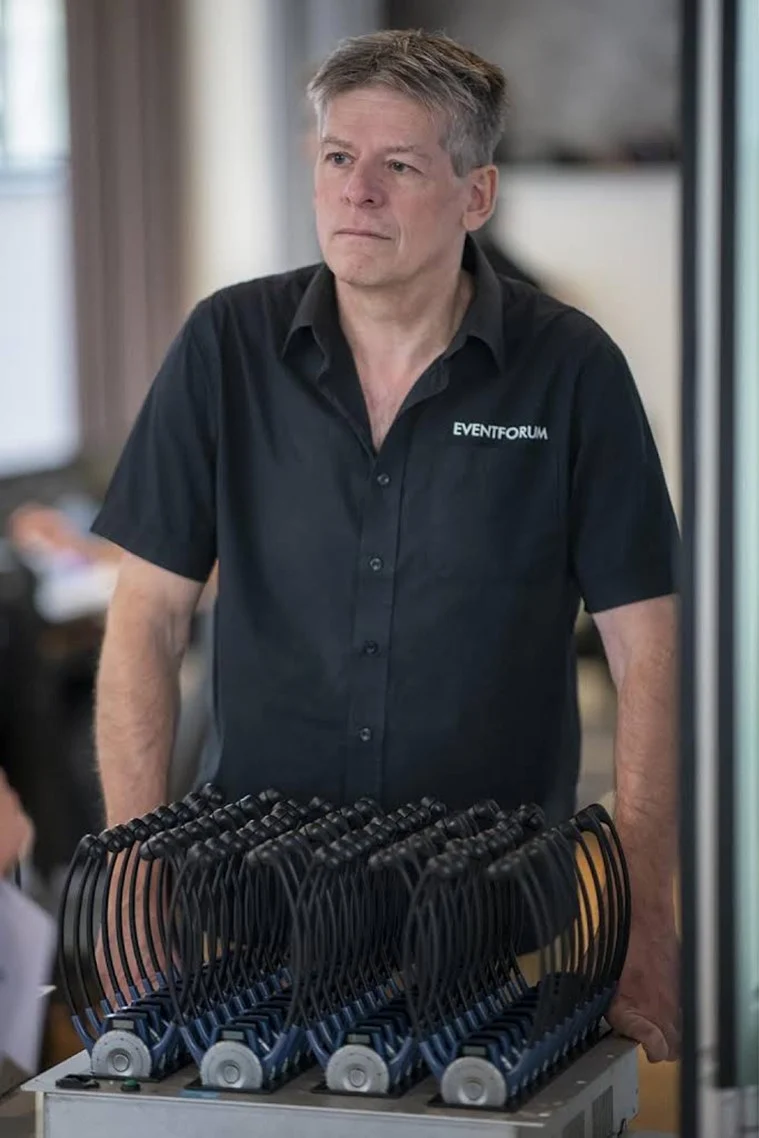
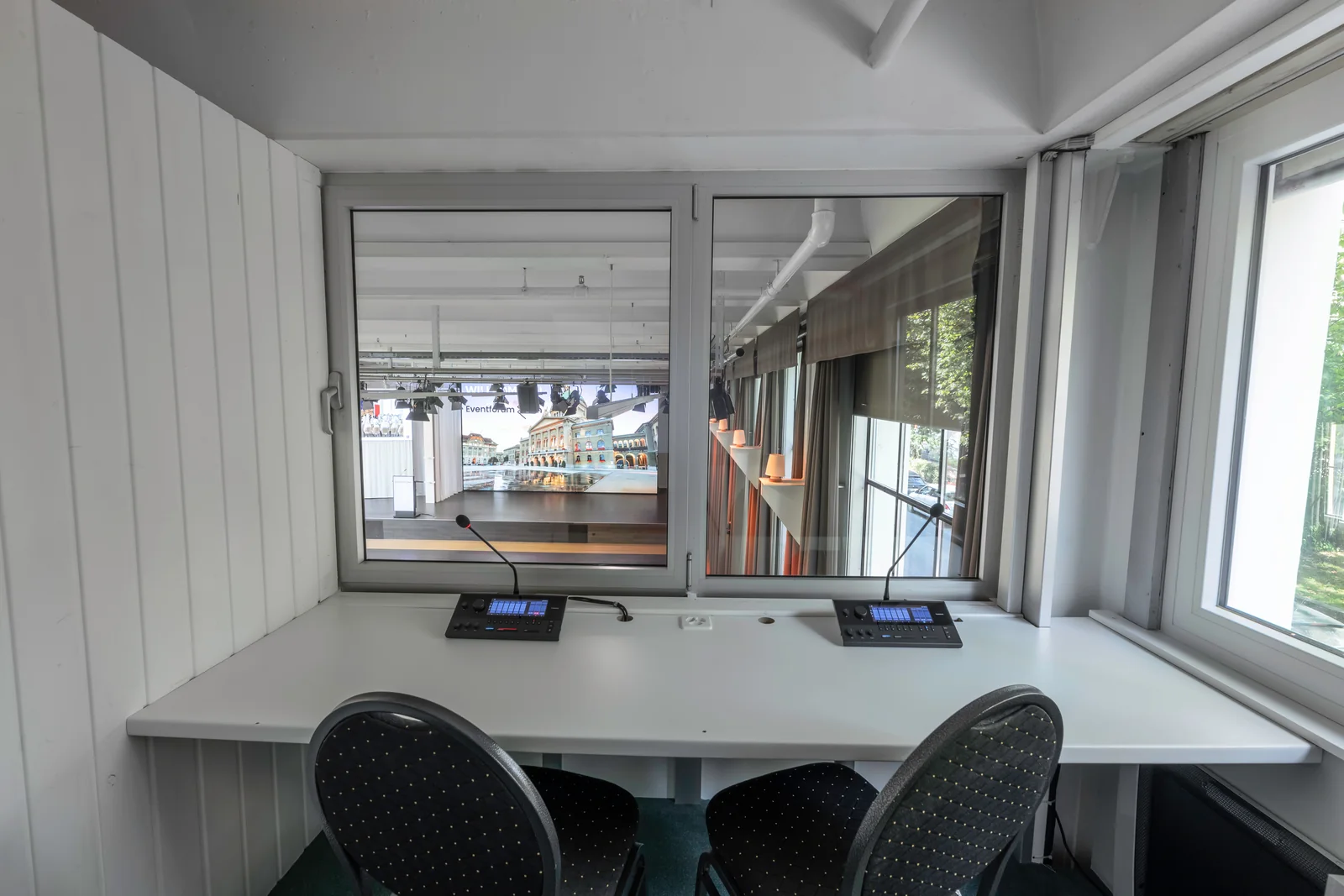
At Eventforum Bern, your interpreting team works in two permanently installed interpreting booths with a Televic system, and the audience listens via Sennheiser receivers. Without a booth, PONTAVOX, the Eventforum’s AI interpreting, interprets in up to four languages.
Checklist for your panel
To tick off during preparation, from the key question to thanking the panellists.
Key question phrased and in the programme
Three to five panellists confirmed, briefing sent
Moderator appointed, list of questions agreed
Running order with timings set, question round scheduled
Stage, seating order and water for the panellists prepared
Microphones for panellists, moderator and audience, sound check planned
Names and roles of the panellists for the screen
Livestream, recording and panellists’ consent clarified
Interpreting organised for a multilingual panel
Thanks to the panellists and follow-up report prepared
Panels at Eventforum Bern
Eventforum Bern hosts panels for federations, public authorities and companies, with stage, microphones and cameras in the event hall. No other event takes place during yours.
Send the date, number of people and running order via the booking enquiry. You will receive a first quote within 12 hours.
Frequently asked questions about panel discussions
How long does a panel discussion last?
Usually 45 to 90 minutes with audience questions. Within a conference with several programme items, 45 to 60 minutes is often enough.
How many panellists should a panel discussion have?
Three to five. With 60 minutes and four panellists, each has around ten minutes of speaking time.
What does the moderator do?
The moderator introduces the panellists and the key question, asks questions, shares out speaking time, follows up and involves the audience. They do not join the debate and remain neutral.
How many microphones does a panel discussion need?
One per panellist, one for the moderator and two handheld microphones for questions from the floor. With five panellists, that makes eight.
More guides
Timeline, venue, programme, technology and languages. With a checklist for companies, federations and public authorities.
Objective, agenda with timings, room and technology. For kick-offs of projects, years and programmes with many participants.
Theatre, classroom, banquet and U-shape seating. What each suits, how much space it needs and what fire safety requires.
Last updated: October 2026. The timings are guideline values from planning practice; the programme and schedule of your event take precedence.