
Guides · For companies and public administrations
Planning a kick-off meeting
A kick-off meeting marks the start: of a project, a financial year, a new strategy or an organisation after a merger. Everyone hears the same message at the same time, meets the people in charge and knows afterwards what comes next. This guide is for organisers in companies and public administrations who are planning a kick-off for 50 to 300 people. It shows how to set the goal and agenda, what venue and technology you need and how to involve employees at other sites.
What is a kick-off meeting?
A kick-off meeting is the opening meeting that starts a project, a programme or a financial year. Everyone involved hears the same goals, meets the people in charge and learns how the collaboration will work and what comes next. The term comes from football, where the kick-off starts the match.
Other names are kick-off session, launch meeting, start-up meeting or launch event. Kick-off session and start-up meeting usually refer to the start of a project in a small group, launch event to a larger occasion with many participants.
The goals of a kick-off meeting
- Everyone knows the goal, benefits and scope of the undertaking.
- Roles, responsibilities and contact persons are clear.
- Schedule, milestones and the first steps are set.
- The ground rules for working together are agreed: meetings, channels, decisions.
- Those involved get to know each other and start with the same message.
Which kick-off are you planning?
The format depends on the occasion and the number of participants. Three types are the most common.
| Type | Participants | Duration | Focus |
|---|---|---|---|
| Project kick-off | project team, client, departments involved | two to four hours | goals, roles, deadlines, first work packages |
| Programme or strategy kick-off | 50 to 200 people from several departments | one day | direction, priorities, group work |
| Annual kick-off or Town Hall | from 100 employees | half a day | review, goals for the year, questions to the management |
For a small project kick-off, a meeting room is often enough. As soon as several teams, sites or the whole workforce take part, you need a hall with a stage, technology and space for breaks. The guide Planning an in-person PI Planning shows how agile teams plan together every eight to twelve weeks.
Town Hall Meeting
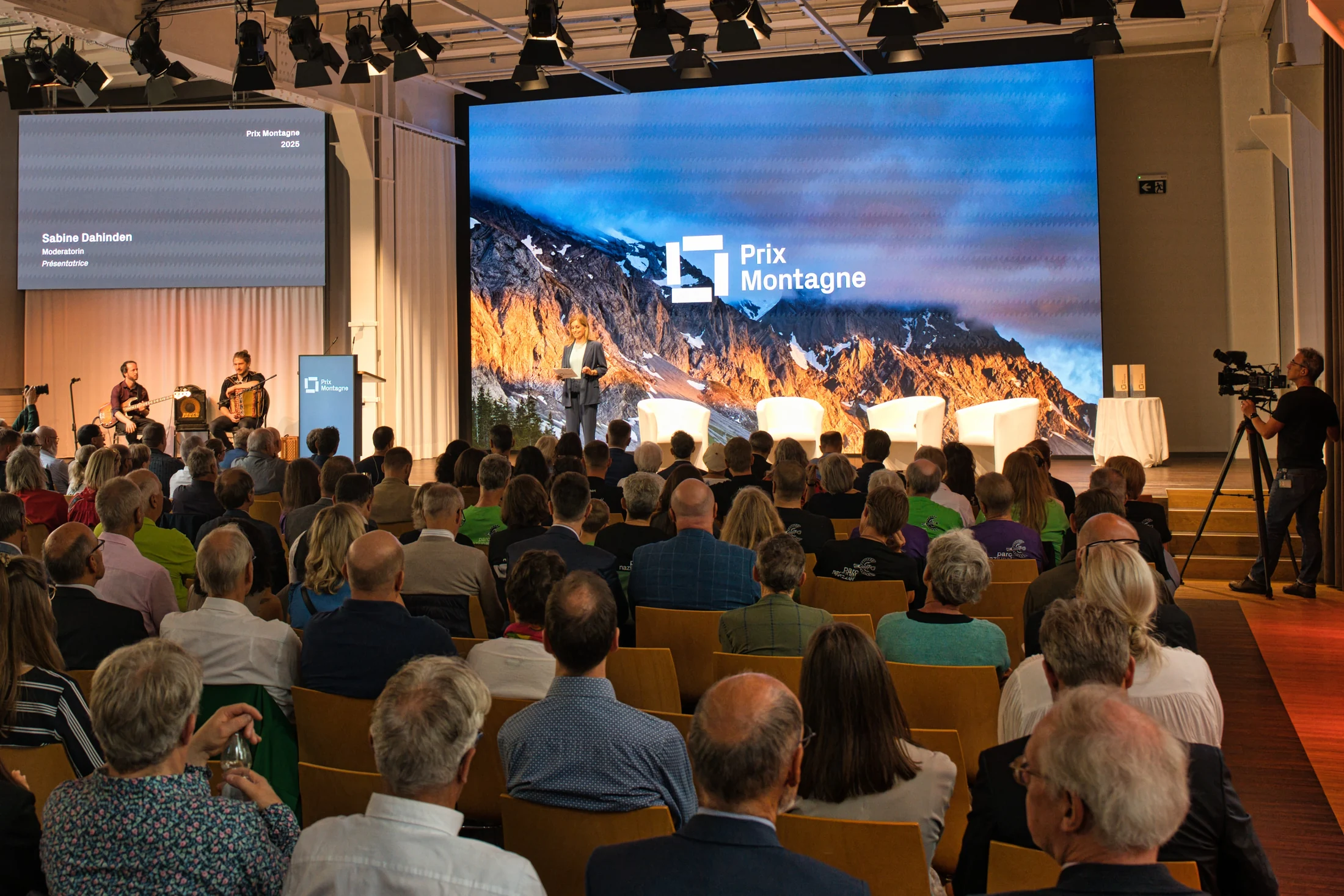
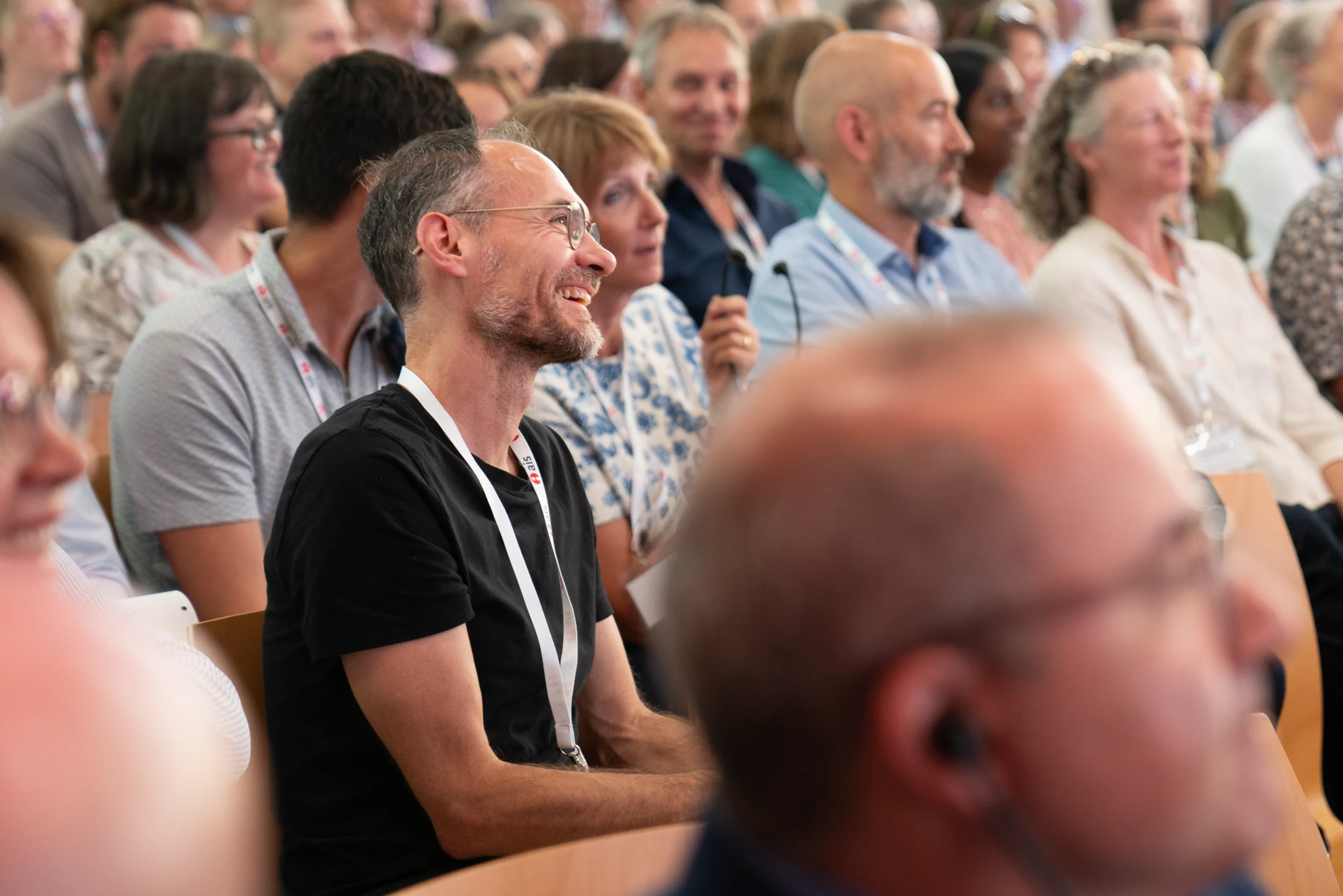
A Town Hall Meeting is a gathering of the whole workforce or a large division. The management reports on the situation, figures and goals, then employees ask their questions. It often lasts one to two hours; as part of an annual kick-off it fills half a day. Three things determine whether the exchange works:
- Collecting questions: in advance via a form or during the event with a polling tool, so that quieter people also have their say.
- Microphones in the room: handheld microphones for questions from the audience, so that everyone in the room and on the livestream can hear them.
- Moderation: one person who groups the questions, follows up and keeps an eye on the time.
Employees at other sites take part via livestream and ask their questions in the chat. In multilingual organisations, simultaneous interpreting is added.
Setting the goal and message
Before anything else, answer three questions. What should participants know afterwards? What should they decide or do? What impression should remain?
A core message in one sentence helps everyone who speaks on stage. Decide who opens, who explains goals and figures and who answers questions. For an annual kick-off this is usually the management; for a project, the client.
Agenda with timings
Example of a half-day kick-off with 150 people and workshops. The timings are guidelines.
Plan a break after 60 to 90 minutes and allow 5 to 10 minutes for each change between the plenary and the breakout rooms. Short contributions of 10 to 20 minutes hold attention better than one long talk. The same applies to a kick-off with customers or partners, with extra time for conversations.
08:30
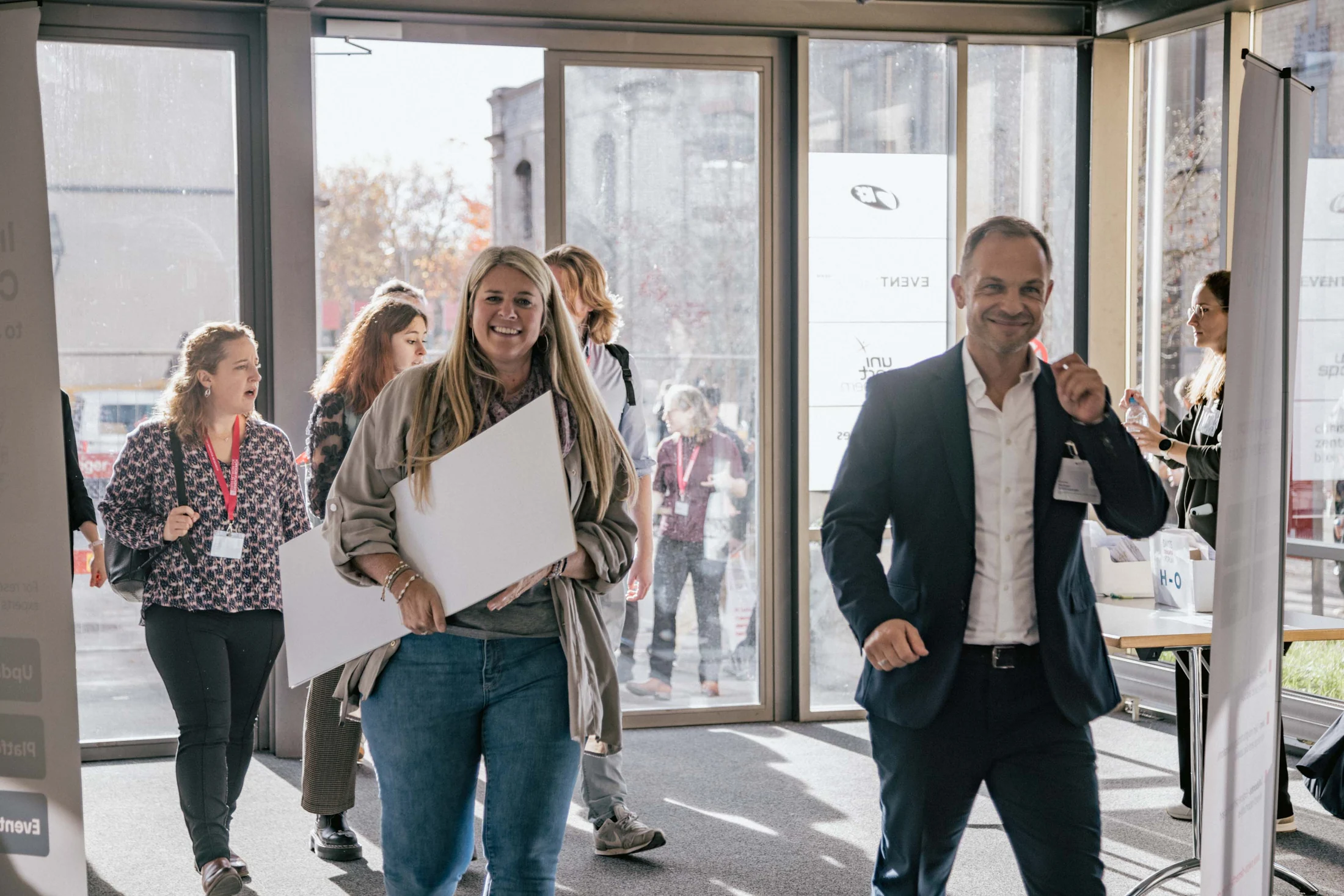
Arrival, coffee and name badges in the foyer
09:00
Welcome and core message
09:15
Review: what has been achieved
09:40
Goals and priorities, with examples from the departments
10:20
Questions from the floor
10:40
Break
11:00
Workshops in groups, in parallel in several rooms
12:00
Results in the plenary, three minutes per group
12:30
Close and next steps
12:45
Lunch or drinks reception
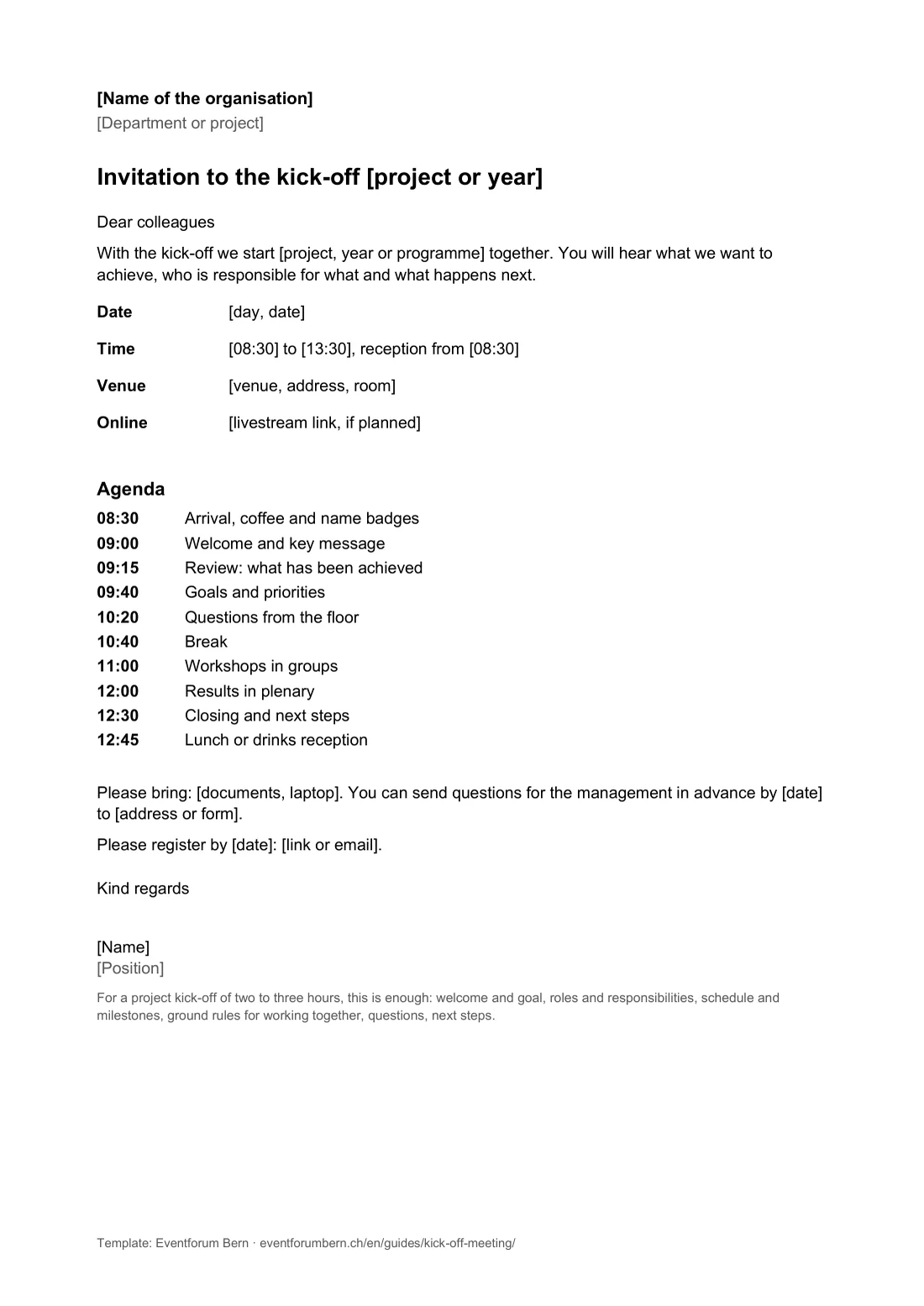
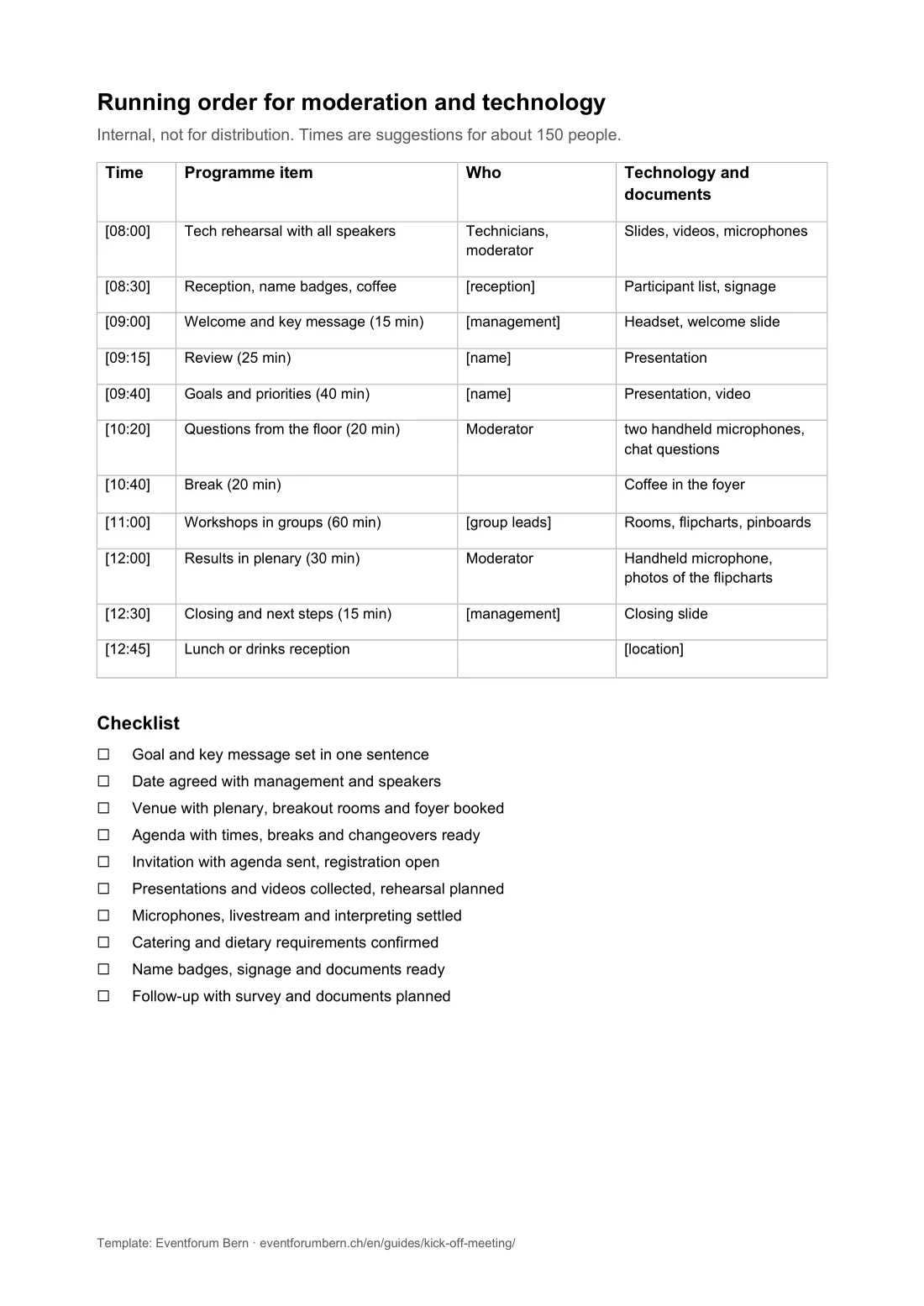
Agenda template for your kick-off
- Page 1: invitation with agenda for a half-day kick-off, with the timings from the example above
- Page 2: running order for moderation and technology with time, programme item, person responsible and technology, plus the checklist
- With a note on how to shorten the agenda for a project kick-off of two to three hours
Word file (DOCX), also opens in LibreOffice and Pages.
Venue and seating
- Talks and questions: theatre style, facing the stage.
- Work in the plenary: banquet or classroom style at tables.
- Parallel workshops: breakout rooms close to the plenary, so that changes stay short.
- Arrival, breaks and drinks reception: a foyer next to the hall.
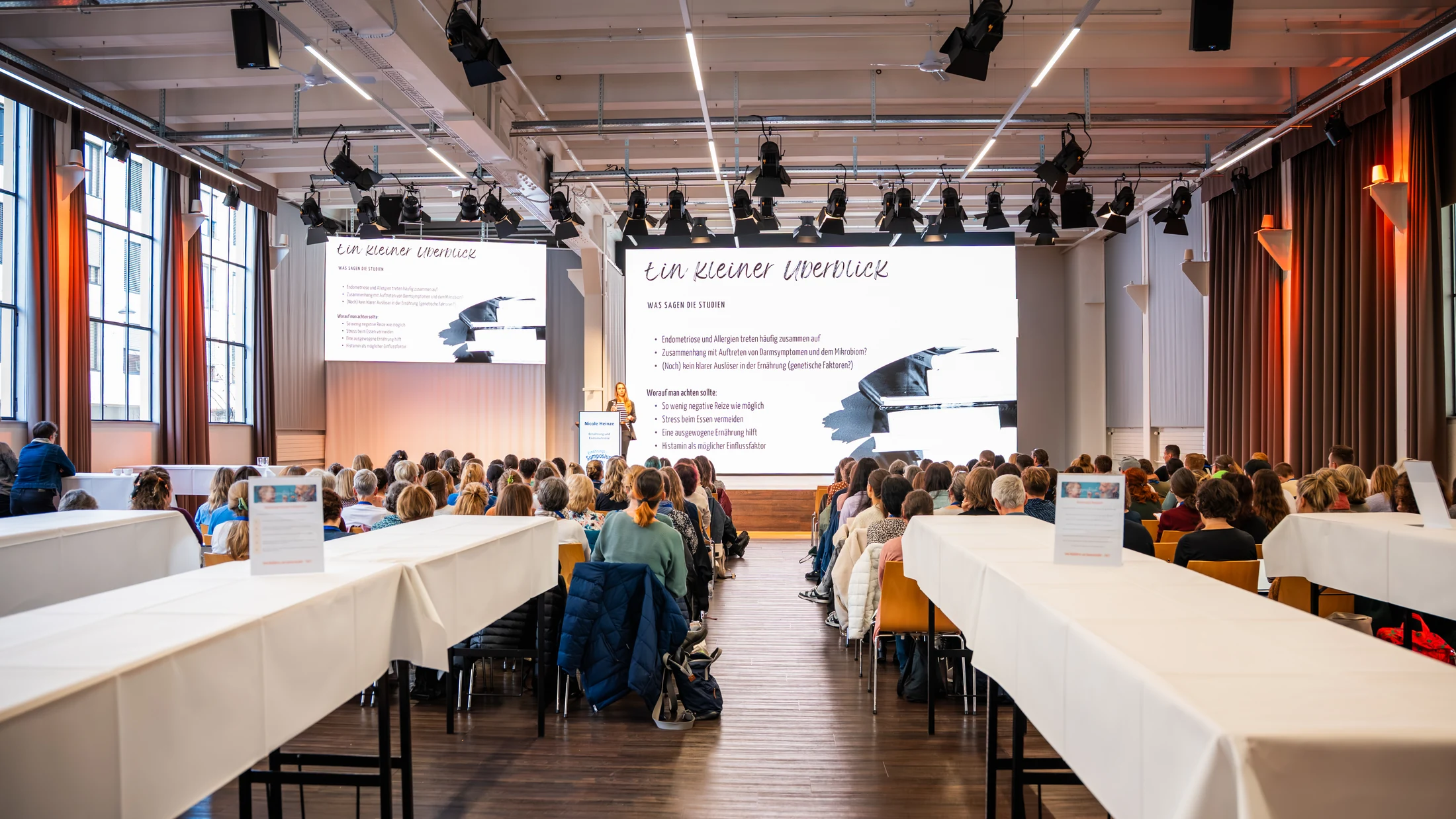
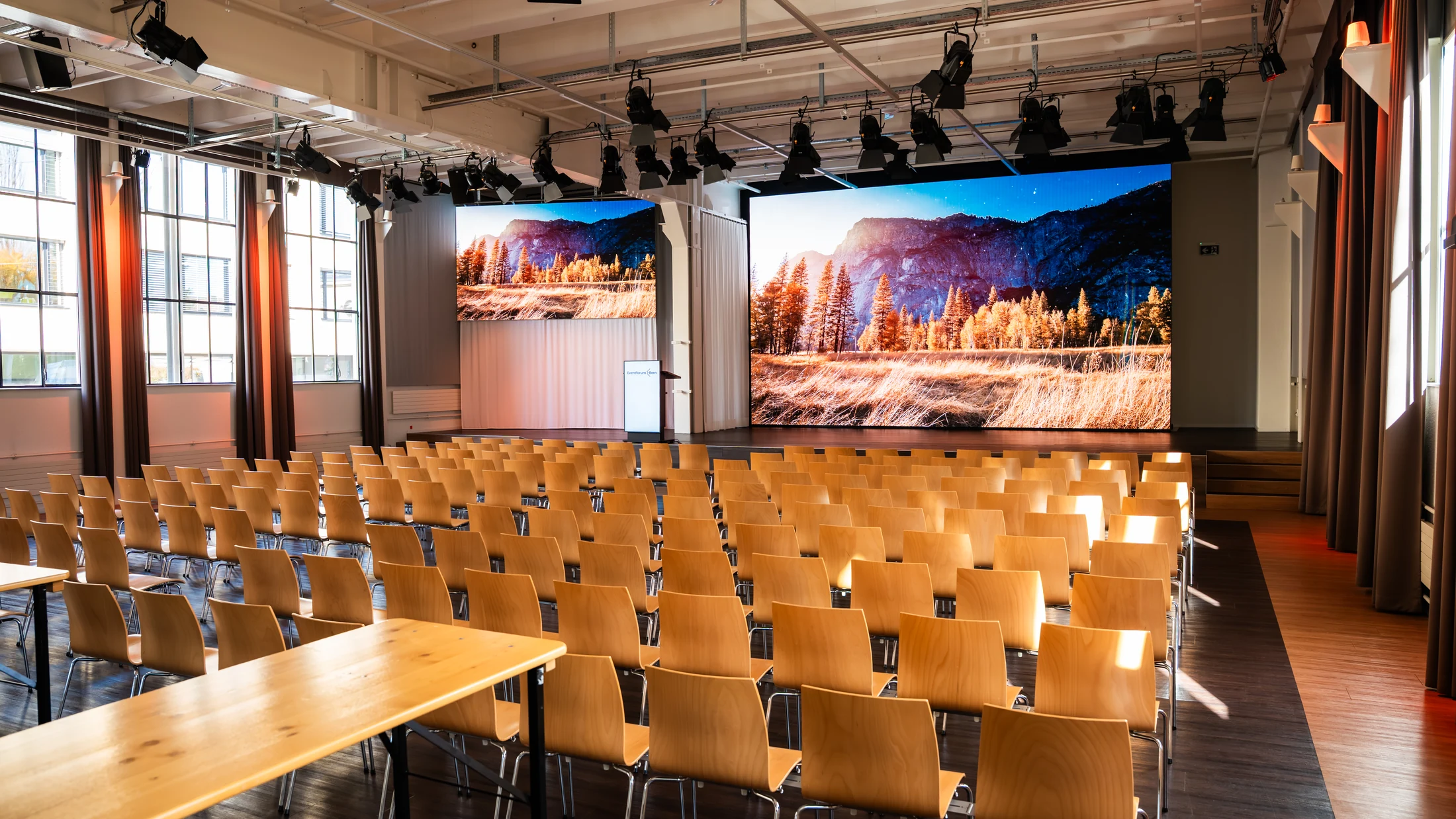
At the Eventforum Bern, the event hall offers up to 380 seats in theatre style or 136 at classroom tables. The foyer adjoins it directly, and the five workshop rooms are on the lower level, reachable by lift and stairs. During your event, the Eventforum is yours alone. The Corporate event page shows how a corporate event works here.
See seating styles and space requirements ↗Technology for stage and hall
- Microphones for everyone who speaks: headset or handheld, plus one or two handheld microphones for questions from the floor.
- Collect presentations in advance, in the same format, and decide who plays the videos.
- Large screens, so that figures and charts are legible from the back row.
- A rehearsal with all speakers before doors open.
At the Eventforum Bern, the stage has two 4K LED walls and the sound system is designed for a full hall. Headsets, handheld and gooseneck microphones are available, and the Eventforum’s technical team looks after the event from the rehearsal to the end.
Event technology ↗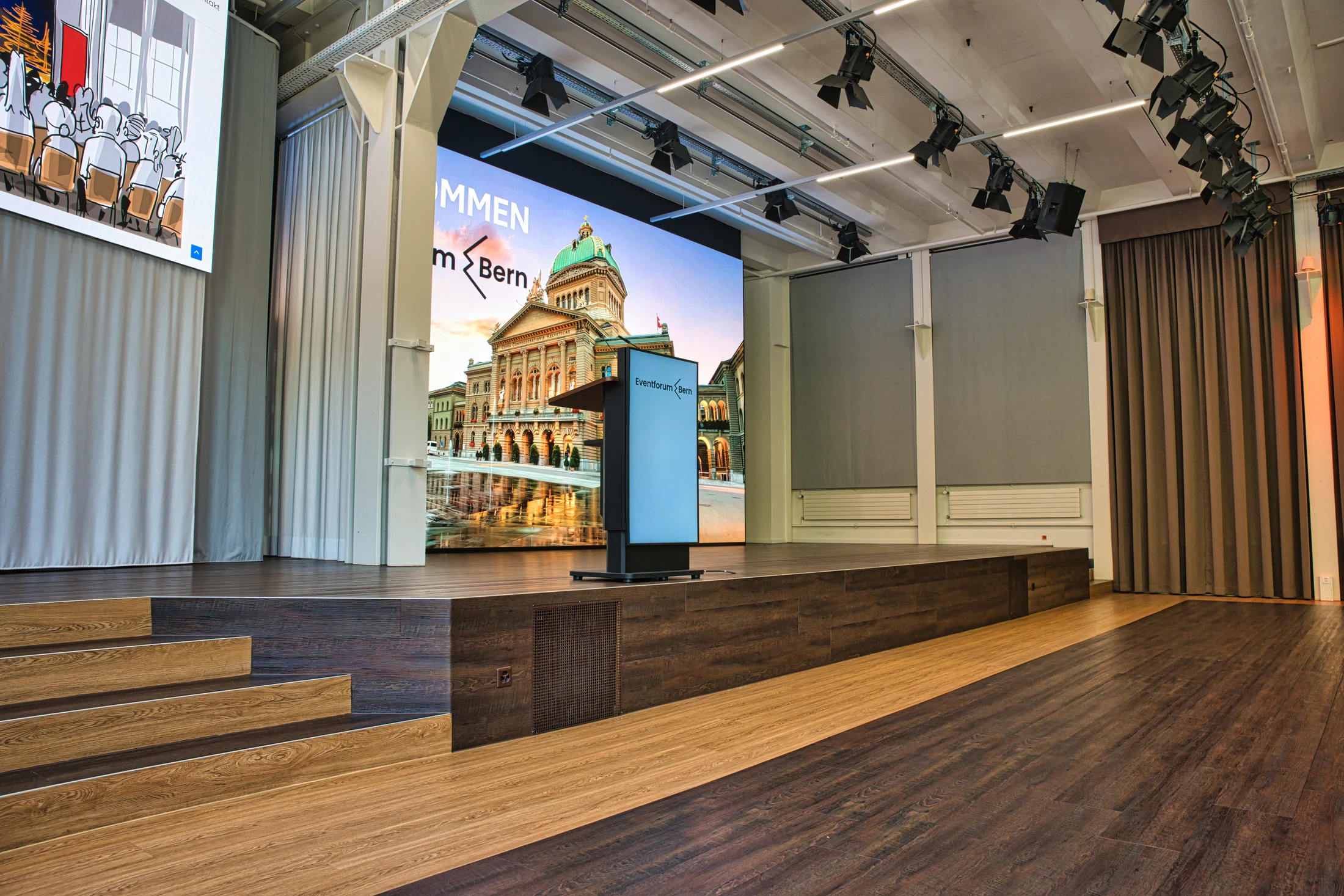
Involving other sites and languages
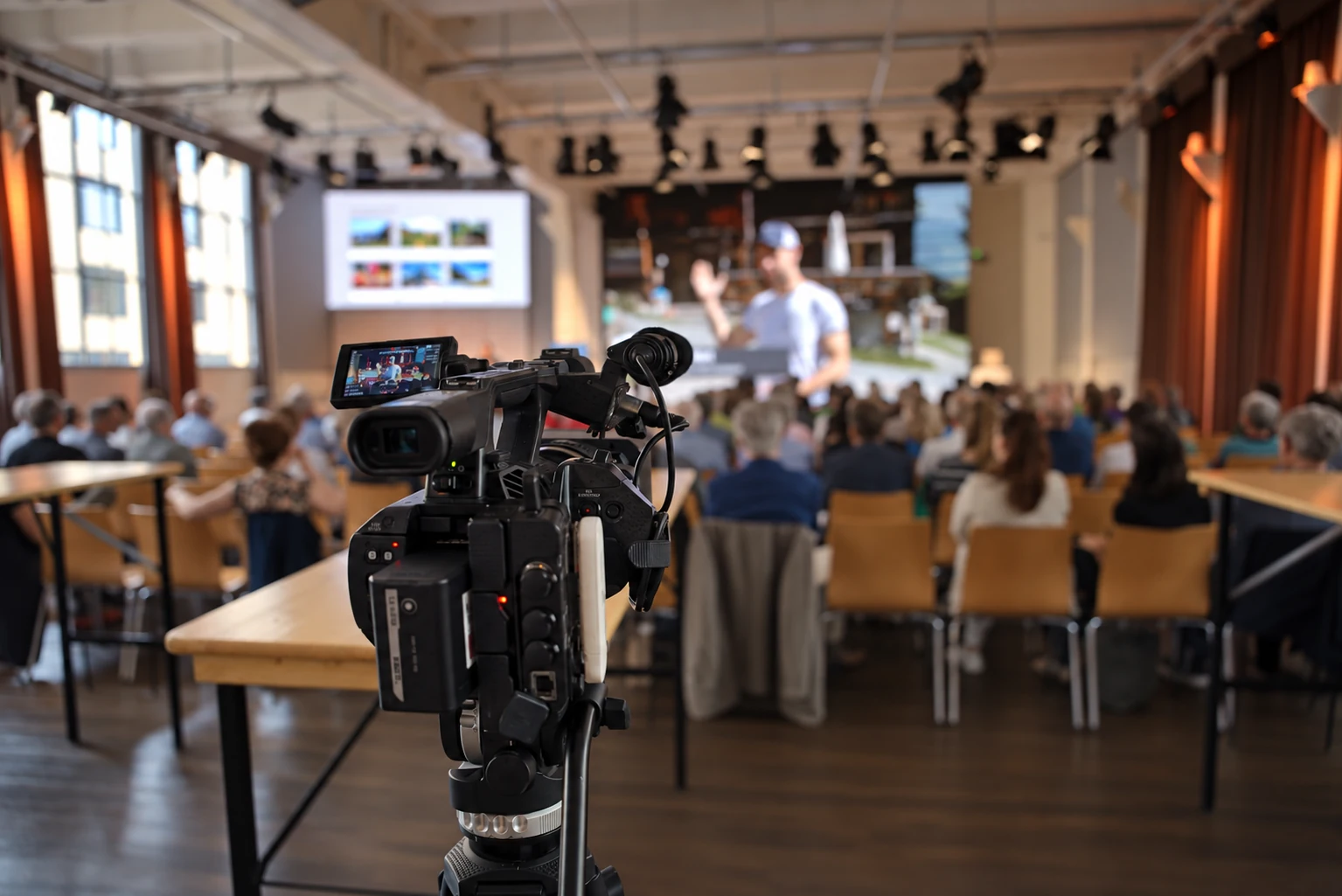
Those who cannot attend in person follow the kick-off on a livestream. Plan for one person who collects questions from the chat and brings them into the room, and decide early whether the stream stays internal and whether you record it. In multilingual organisations, simultaneous interpreting helps employees from French-speaking Switzerland follow the speeches in their own language.
At the Eventforum Bern, cameras, sound and a dedicated line for livestreaming are permanently installed; on request we stream your kick-off (hybrid and livestreaming). For interpreting, there are two built-in interpreting booths for your own team of interpreters, or PONTAVOX, the Eventforum’s AI interpreting, in up to four languages.
Catering and closing
Coffee on arrival and a drinks reception or lunch at the end give teams that rarely see each other time to talk. For a break with 150 people, allow 20 to 30 minutes.
At the Eventforum Bern, the catering partner ZFV from the neighbouring building serves coffee, lunch and drinks receptions in the foyer.
Catering ↗Planning an apéro riche ↗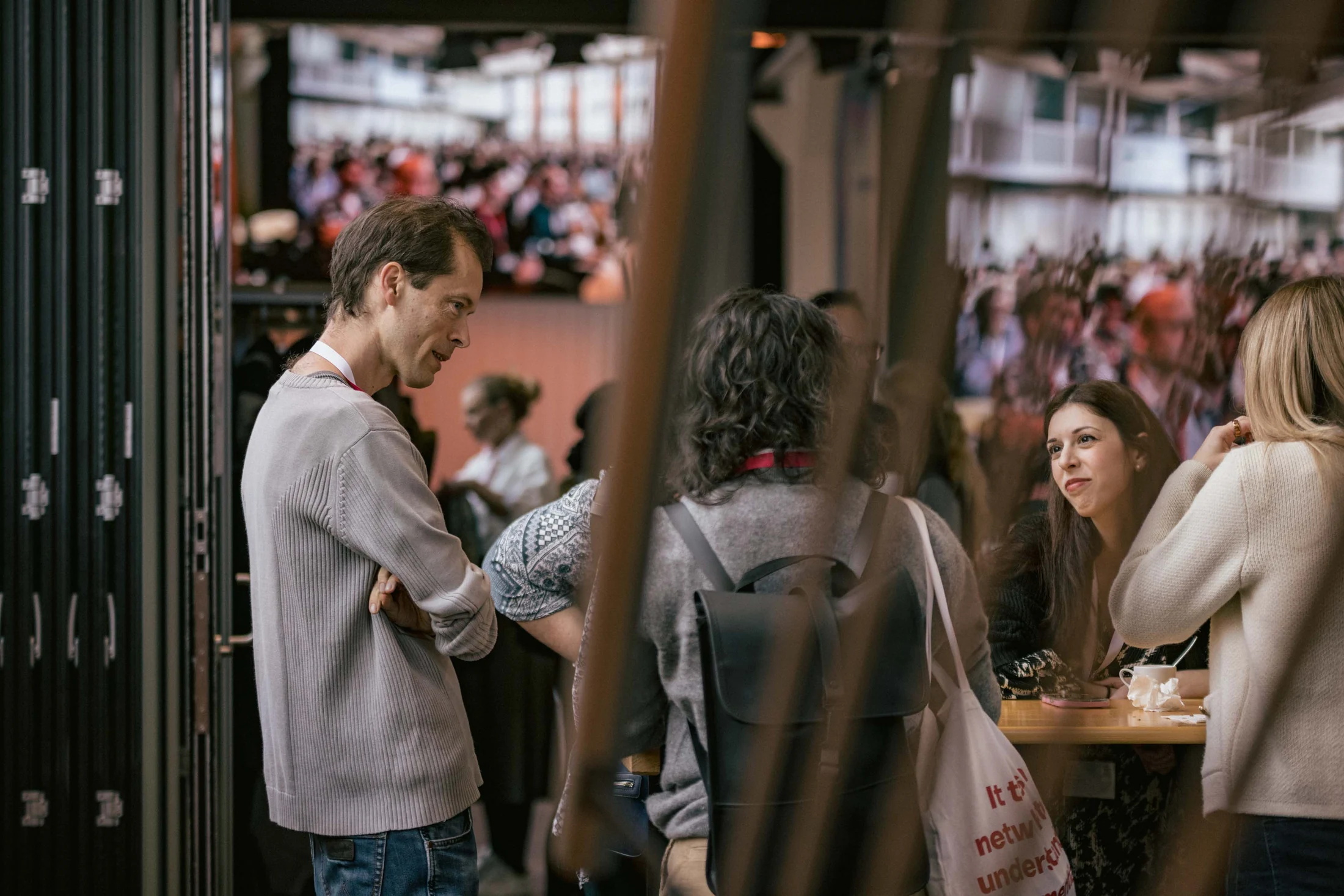
Follow-up
A kick-off has an effect when something follows. In the week after the event, record what was said and decided, and explain what happens next.
- Share the presentations and the recording within a week
- a short survey: what was clear, what is still open?
- answer open questions from the floor
- name the next dates and contact persons
Checklist for your kick-off
To tick off during preparation, from the goal to the follow-up.
Kick-off at the Eventforum Bern
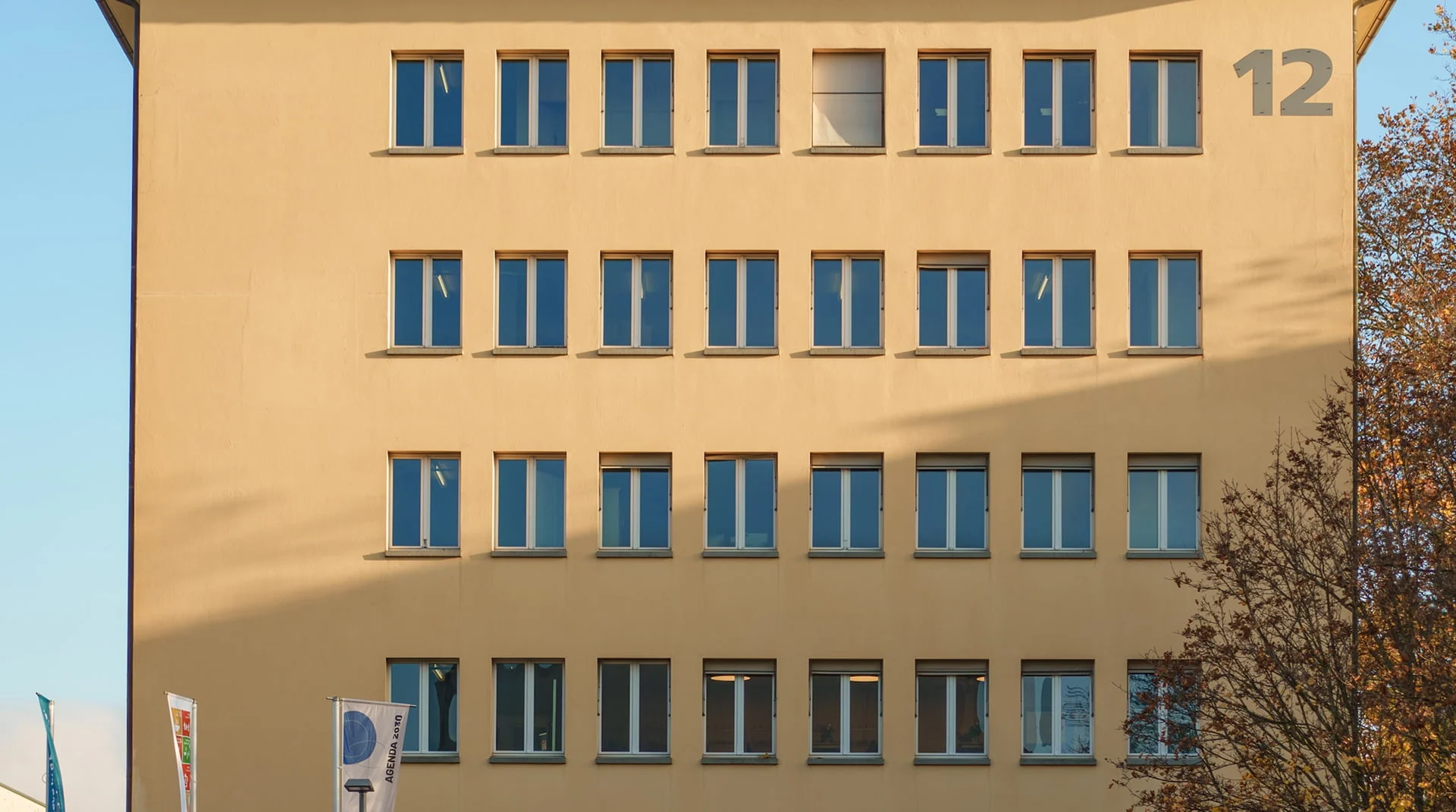
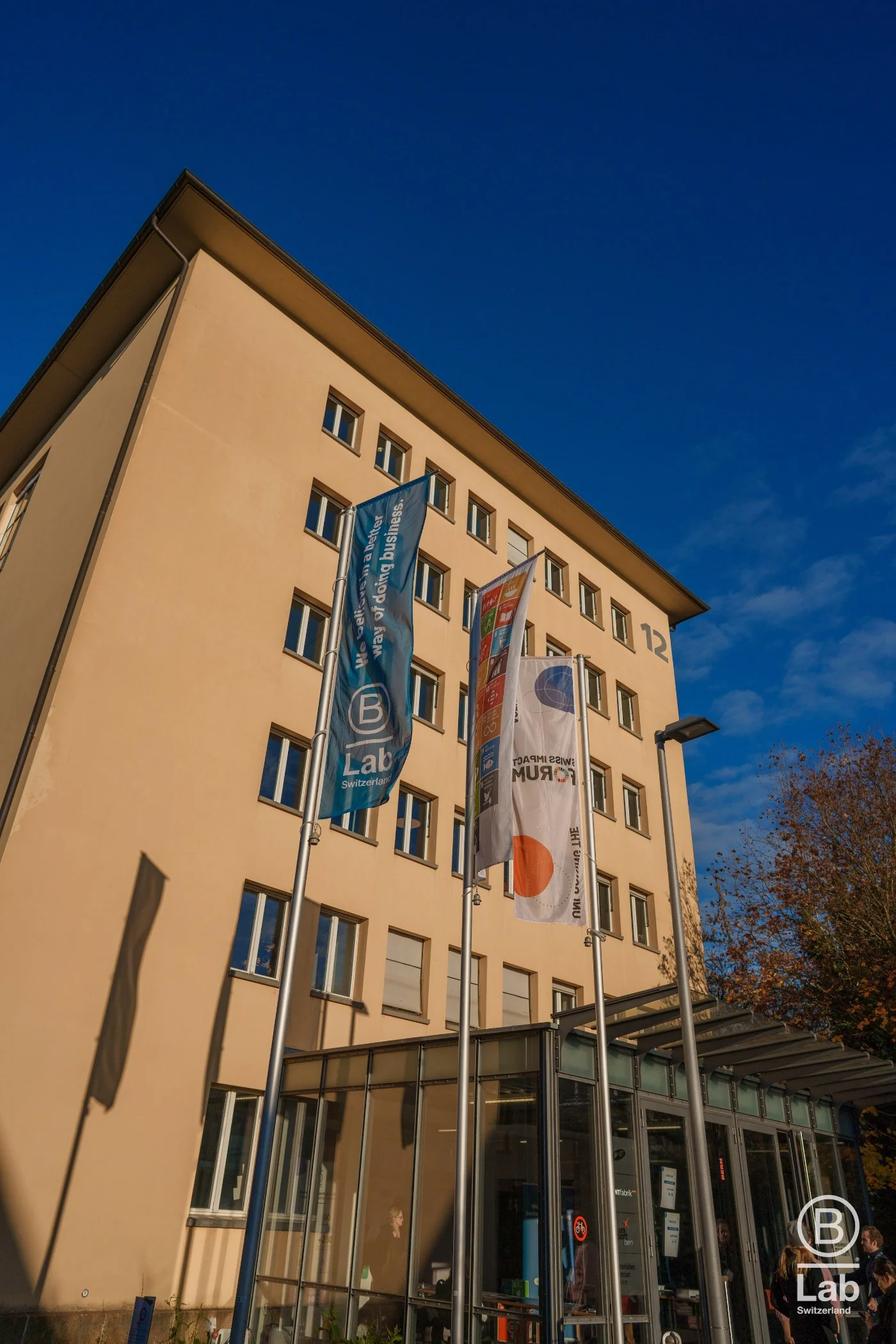
Companies and public administrations hold their kick-offs at the Eventforum Bern. The event hall, foyer and workshop rooms are in the same building, and no other event takes place during yours.
Send the date, number of people and programme via the booking enquiry. You will receive a first quote within 12 hours.
Frequently asked questions about the kick-off meeting
How long does a kick-off meeting last?
A project kick-off usually lasts two to four hours. An annual or strategy kick-off with workshops fills half a day to a full day. More than one day is only worthwhile with clearly separate parts of the programme.
How early should I start planning?
For a kick-off with more than 100 people, three to six months in advance: first the date and venue, then the agenda and speakers. The invitation goes out four to six weeks before the date.
What goes on the agenda?
Welcome and core message, review, goals and priorities, time for questions, group work, results and next steps. Each item gets a time and a person responsible.
How do we involve employees at other sites?
With a livestream and one person who picks up questions from the chat. Good microphones for everyone who speaks are important, otherwise remote participants understand little. In multilingual organisations, simultaneous interpreting is added.
What is a Town Hall Meeting?
A gathering of the whole workforce or a large division at which the management reports and answers questions. Unlike a kick-off, the focus is not on a start but on open exchange. Some companies hold one every quarter.
What does kick-off mean?
Kick-off literally means the start of the match, as in football. At work, the word stands for the joint start of a project, a programme or a financial year, usually with a kick-off meeting of everyone involved.
Who takes part in a kick-off meeting?
For a project, the project team, the client and the departments involved. For an annual or strategy kick-off, the management and the employees of the divisions concerned, often with remote locations joining online.
Is there a template for the kick-off agenda?
Yes, on this page as a Word file: invitation with agenda, running order for moderation and technology, and checklist. It can be shortened for a project kick-off of two to three hours.
More guides
Schedule, venue, programme, technology and languages. With a checklist for companies, federations and public authorities.
Key question, guests and moderation, running order with timings, questions from the audience, stage and technology.
Theatre, classroom, banquet and U-shape seating. What they suit, how much space they need and what fire safety requires.
Last updated: October 2026. The timings are guidelines from planning practice; the programme and date of your event are decisive.