
Guides · For companies and public administrations
Planning an in-person PI Planning
At PI Planning, an entire Release Train plans the next eight to twelve weeks: all teams, product management and the Business Owners, usually over two days and in the same place. Many pages explain what PI Planning is. This guide covers the practical side for Release Train Engineers, Scrum Masters and assistants: a two-day agenda, space for the plenary and the teams, board and materials, technology for teams joining remotely, food and drink, and a checklist.
What is PI Planning?
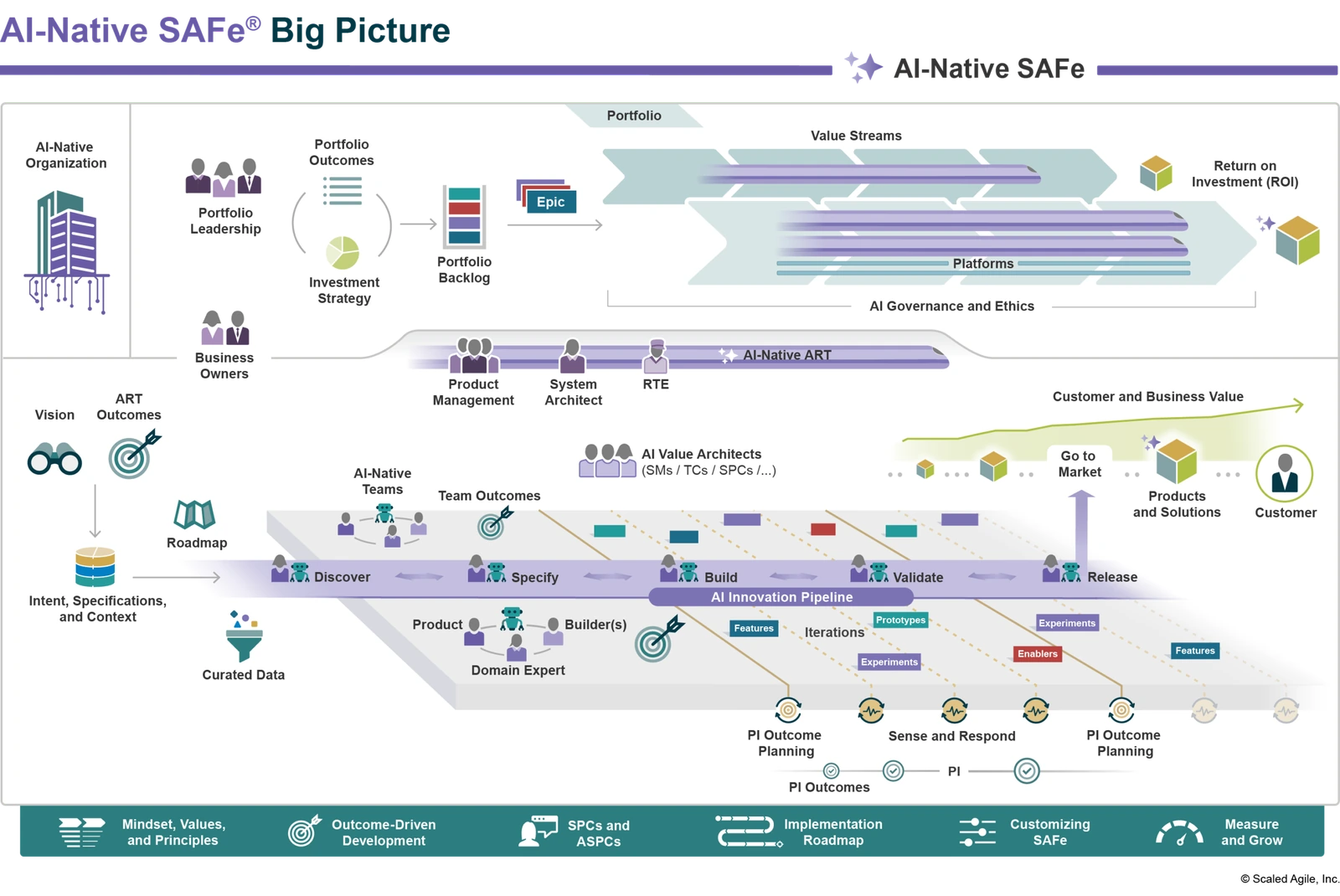
PI Planning (Program Increment Planning) is a fixed event in the Scaled Agile Framework, SAFe for short. All teams of an Agile Release Train align on shared objectives, identify dependencies and plan the work for the next eight to twelve weeks. It is led by the Release Train Engineer.
Scaled Agile recommends that as many people as possible are physically together. The outcome is a set of objectives for each team for the Program Increment and a programme board that shows when each feature will be ready and who depends on whom (Scaled Agile Framework: PI Planning).
- Who: a Release Train of usually 50 to 125 people in five to twelve teams, plus Business Owners and product management
- How often: every eight to twelve weeks, i.e. four to six times a year
- How long: usually two days
- Outcome: objectives per team, programme board, risks and a confidence vote
How a PI Planning runs over two days
An example based on the SAFe standard agenda for ten teams at the Eventforum Bern. The sequence plays through once. Tap an item on the agenda: the floor plan shows where the teams are at that moment, in the plenary in front of the stage, at the team tables, in the foyer or on the lower level, and how the board fills up.
Example for ten teams of eight people, based on the standard agenda of the Scaled Agile Framework (SAFe®), in our own presentation. Times are a guide; we agree the floor plan with you.
Space for the whole Release Train
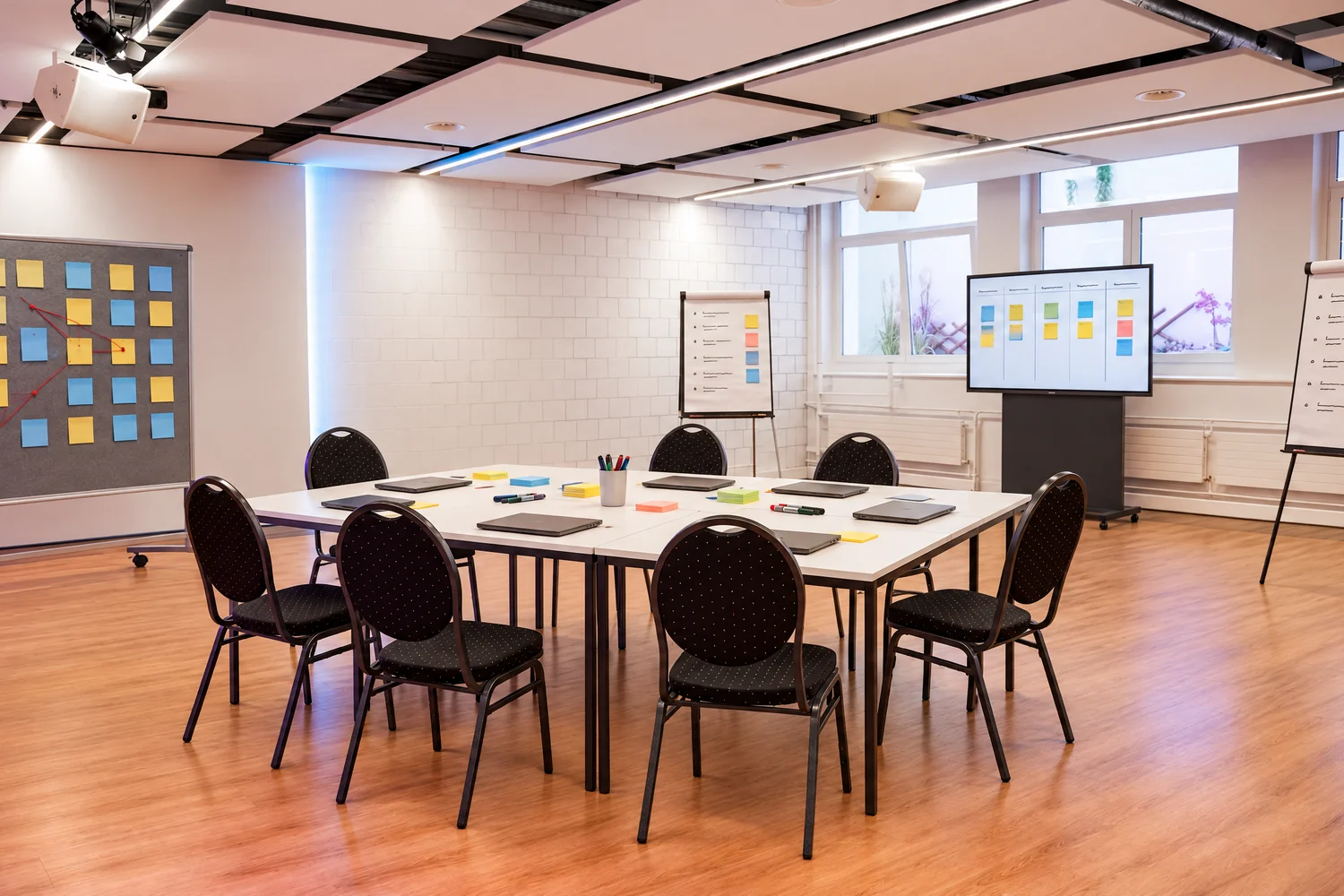
A PI Planning switches between plenary and team work all day. It works best when the teams work in the same hall as the plenary: they hear announcements, see the board and clear up questions at the next table. The room needs five things.
- A plenary area with a view of the stage for the business context, the vision and the presentation of the plans.
- One team table per team with space for laptops and documents, labelled with the team name.
- A long, clear wall for the programme board, easy to reach from all tables.
- A separate room for the management review on the evening of the first day.
- A foyer for coffee, lunch and conversations between the teams.
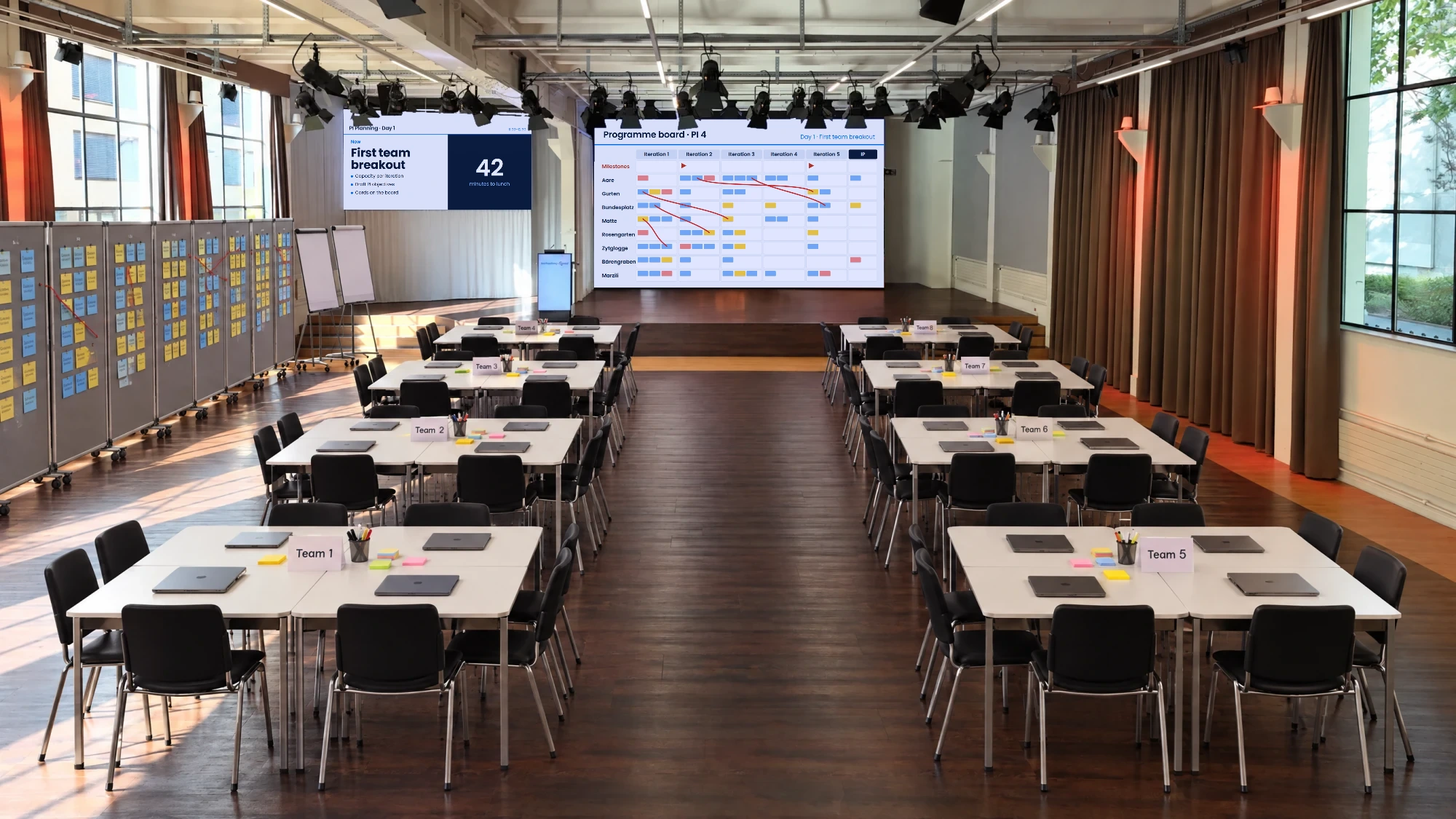
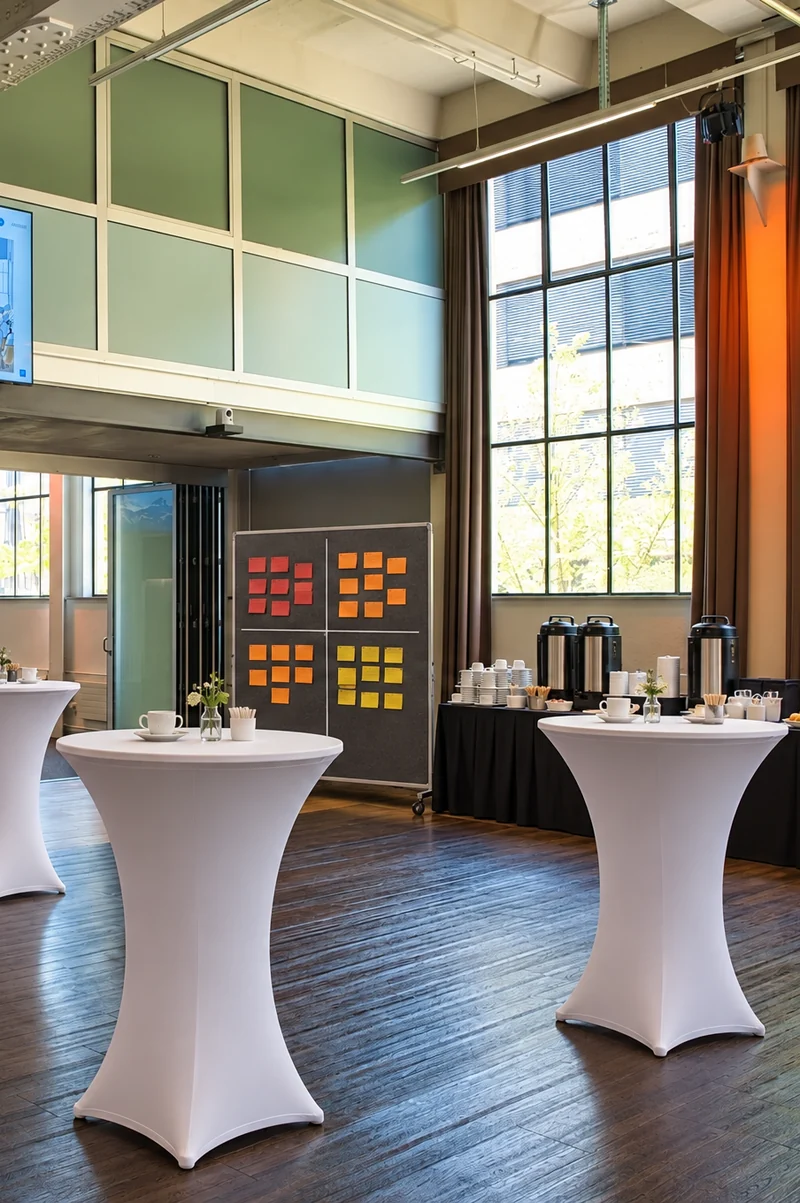
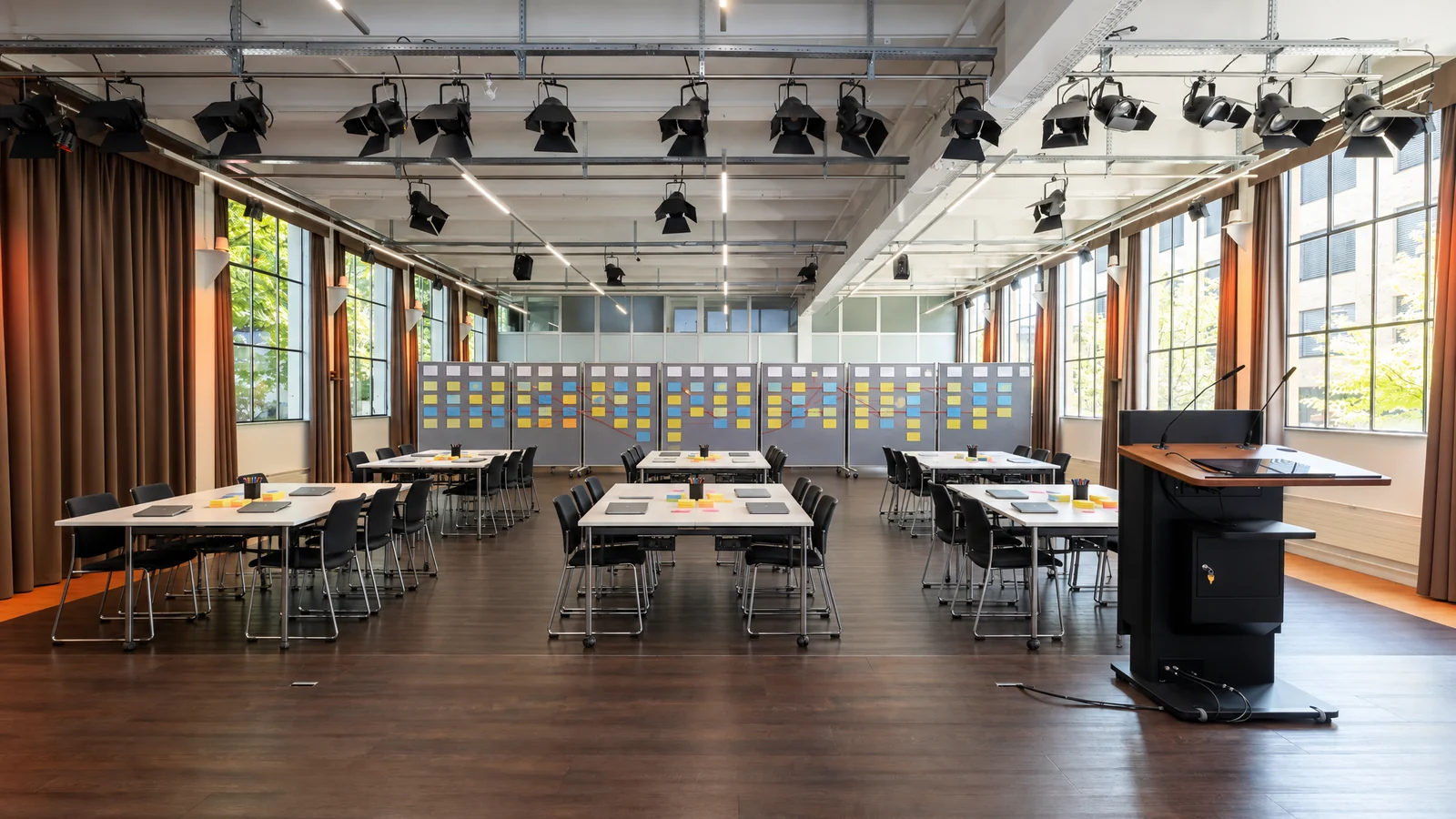
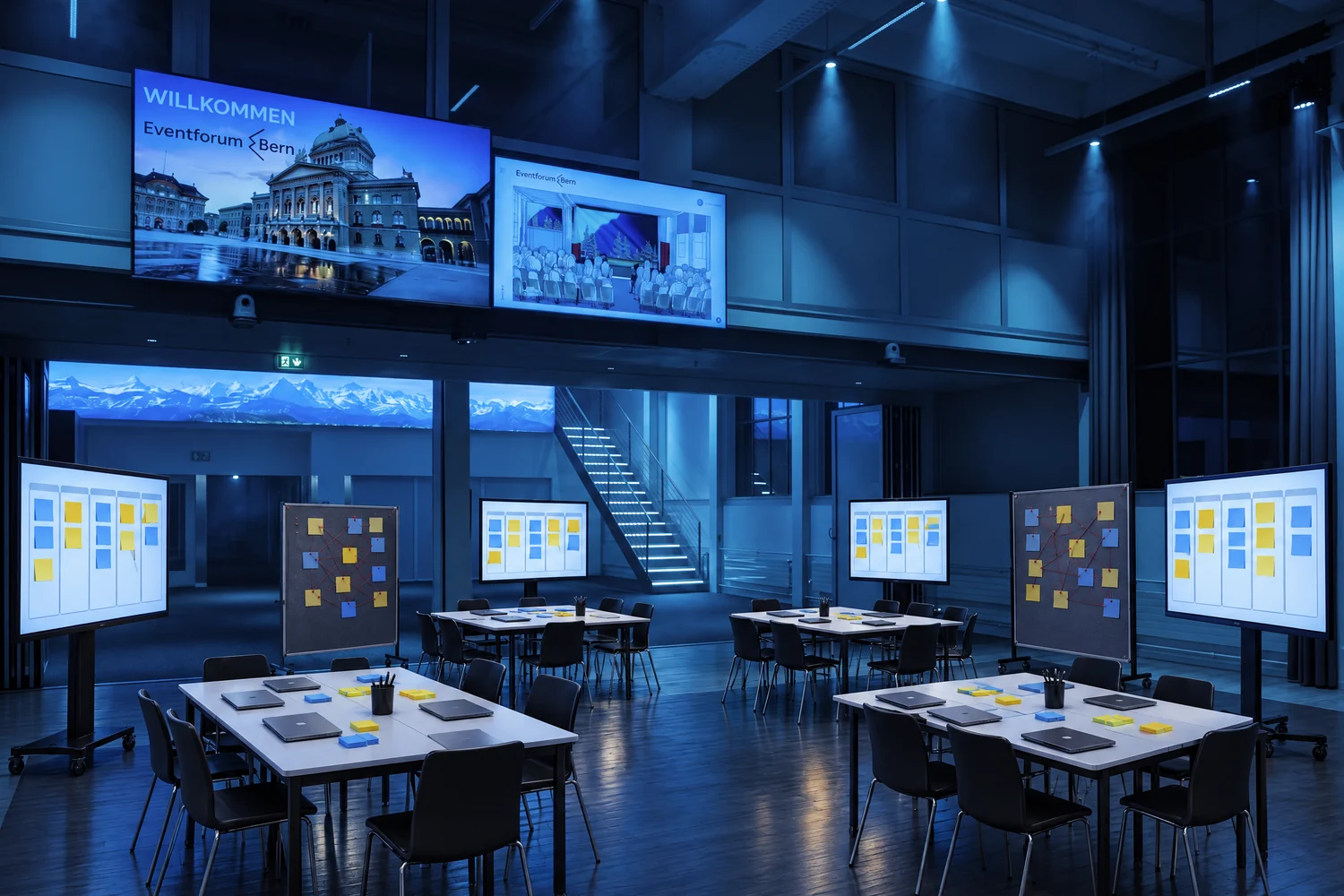
Photo montage: the event hall of the Eventforum Bern, set up for eight teams, with pinboards as the board and the digital board on the LED wall. The floor plan we agree with you is binding.
At the Eventforum Bern
The event hall has 380 m² and up to 136 places at seminar tables; the foyer with 160 m² adjoins it directly. On the lower level are the FabrikLounge with 200 m² and four workshop rooms of 35 m² each, all with a 65-inch screen and indirect daylight, reachable by lift and stairs. If more than 136 people work at tables at the same time, we check the combination of hall and workshop rooms in advance.
The Eventforum is hired out exclusively: no other event takes place on your two days. The Seating styles guide shows how tables and chairs can be arranged.
PI Planning at the Eventforum Bern ↗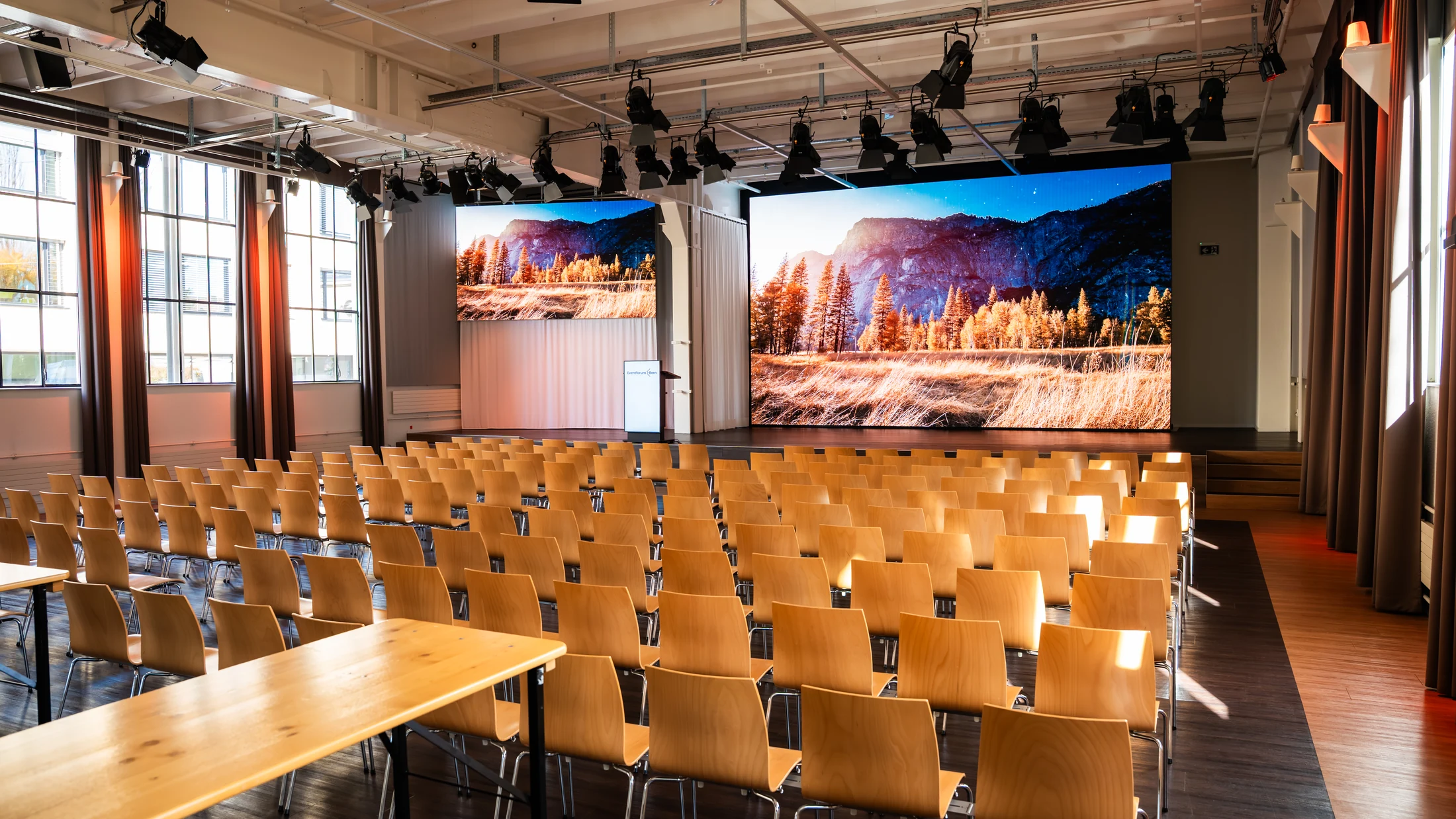
PI Planning board and materials
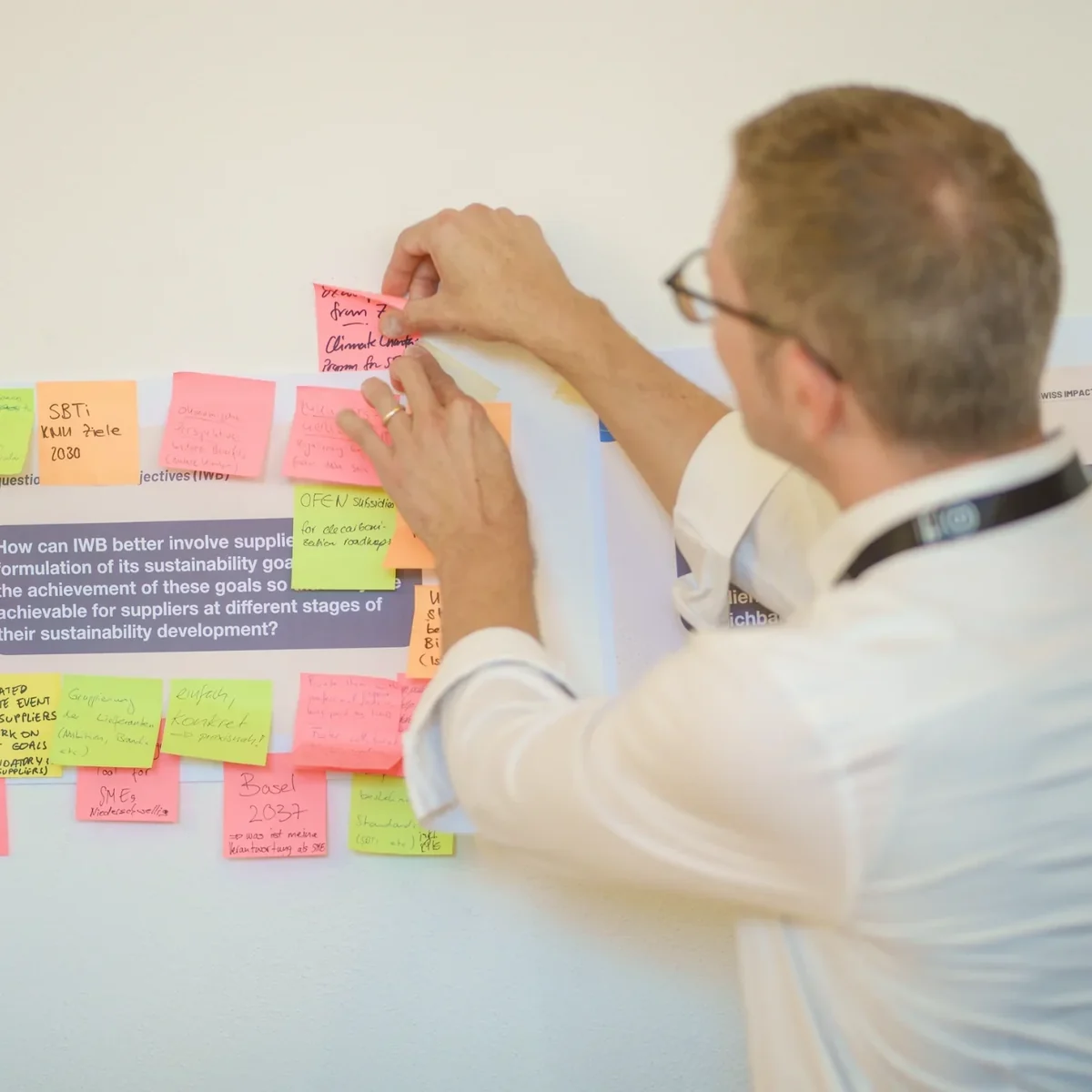
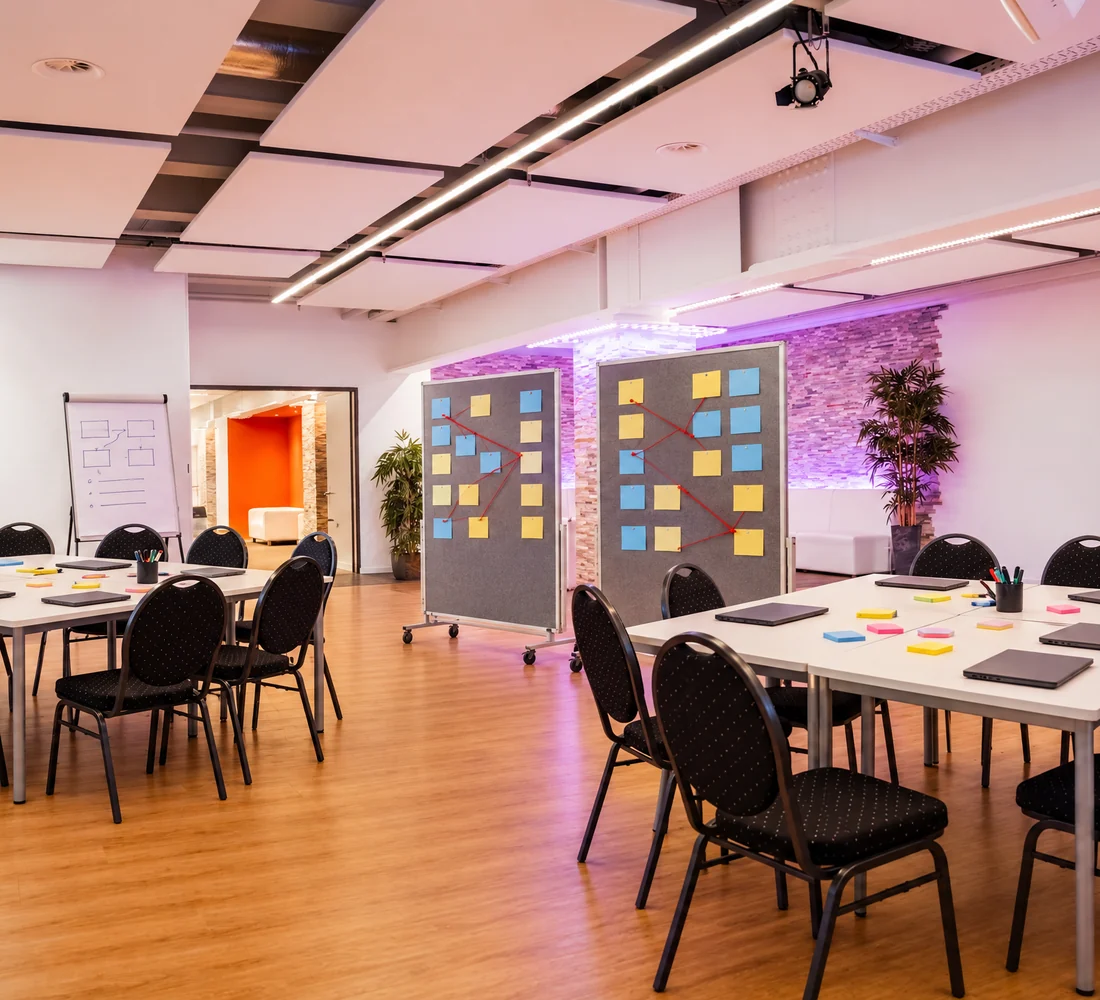
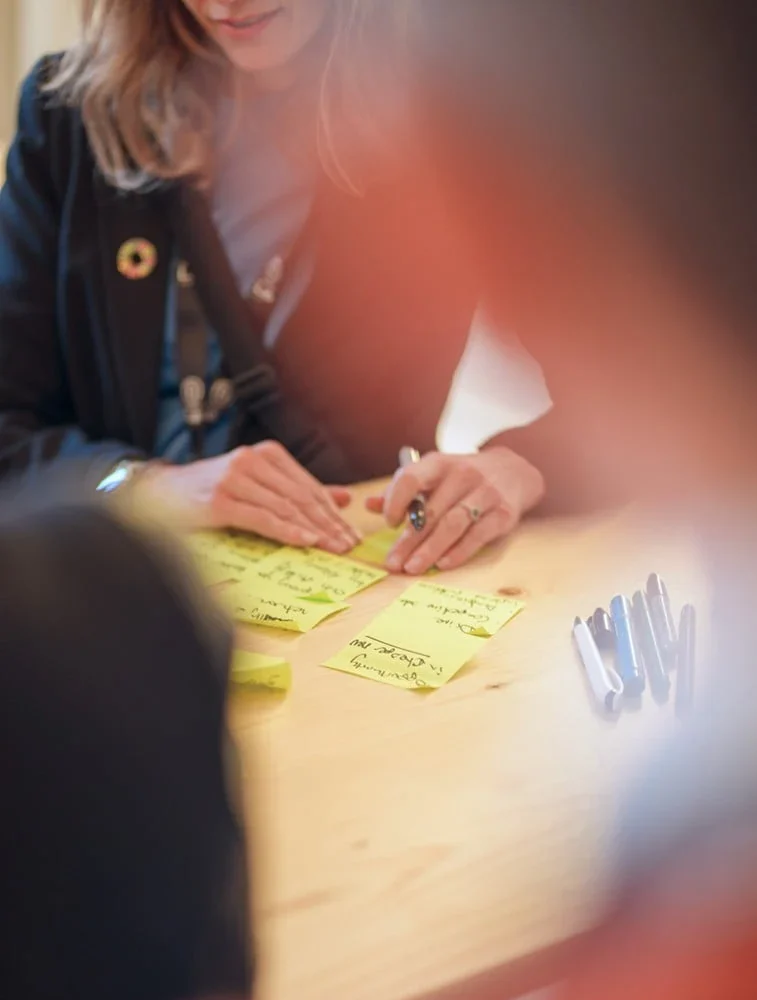
On the programme board, each team has a row and each iteration a column. The teams stick their features as cards in the fields, and milestones go in a row of their own. A red string connects cards that depend on each other. This way the whole Train sees at a glance where things get tight.
- Physical: pinboards side by side as one long wall, cards in several colours, string, pins.
- Digital: a board in the planning tool, visible to everyone on the LED wall and on mobile screens at the team tables.
- Per team: a flipchart for objectives and risks, pens, sticky notes and a name sign for the table.
At the Eventforum Bern, more than 15 flipcharts and pinboards are available; you order further facilitation materials with your booking. The board may stay up overnight, and on the second day the teams carry on where they left off.
Technology and distributed teams
- Large screens for slides, the vision and the digital board, legible right to the back row.
- One screen per team table, where the team shows and updates its own plan.
- Microphones for the stage and two handheld microphones for questions from the floor.
- Stable Wi-Fi for many laptops at once: let us know the number of devices and the tools you use in advance.
- Teams at other locations via Microsoft Teams or Zoom, with picture and sound from the plenary.
At the Eventforum Bern, the stage has two 4K LED walls that can be split, for example for slides next to the board. For the team tables there are mobile 65-inch screens on rolling stands: each team shows its own plan on them. Cameras and sound for the broadcast are permanently installed; on request, we stream the plenary over a dedicated line, separate from the guest Wi-Fi (Hybrid and livestreaming). The Eventforum’s technical team is on site on both days.
If teams from French-speaking Switzerland take part, PONTAVOX interprets the plenary into up to four languages, including in several rooms at once. For your own team of interpreters there are two permanently installed interpreting booths.
Event technology ↗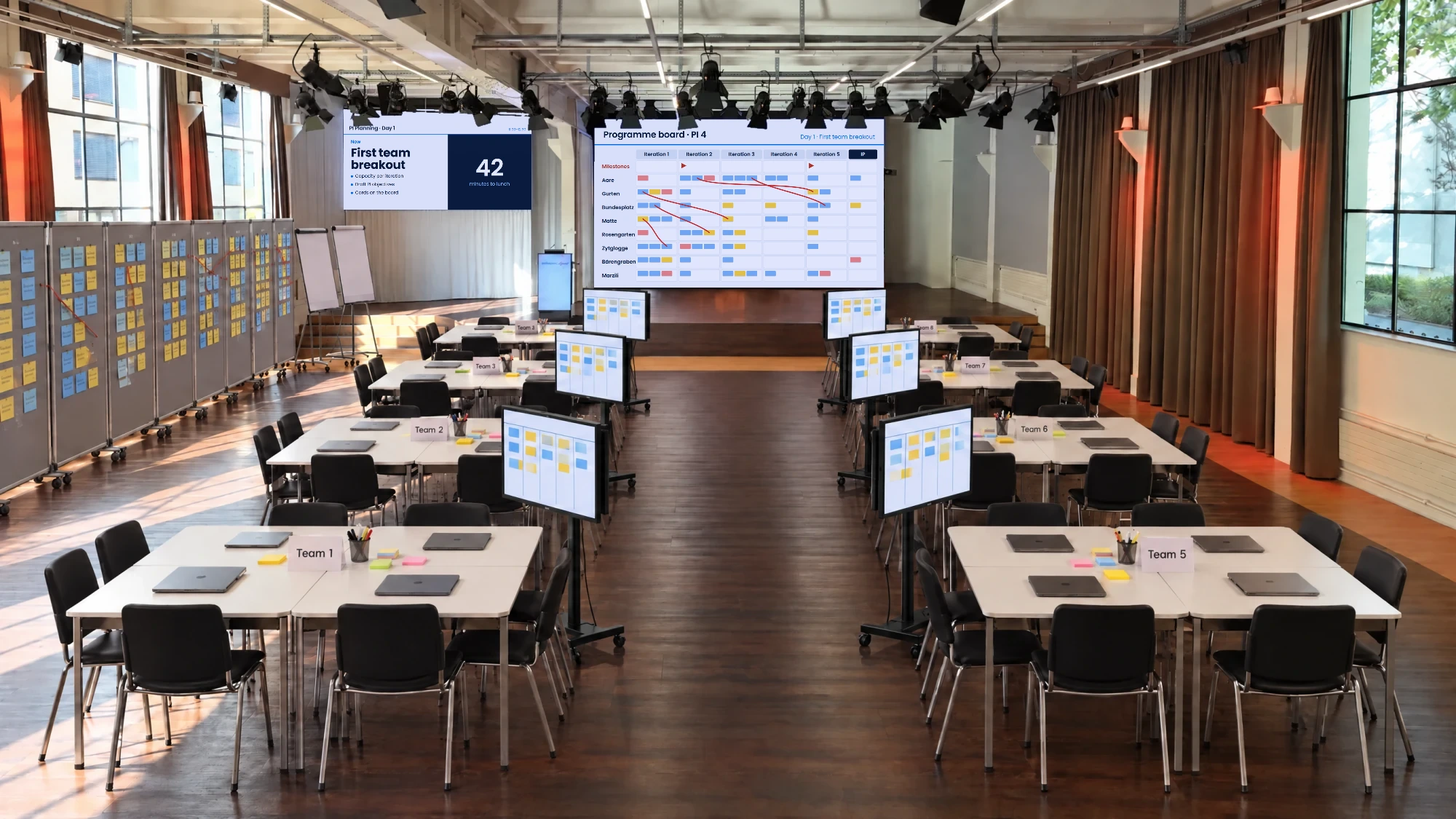
Food and drink over two days
During a team breakout, nobody wants to sit at a table for an hour. A buffet in the foyer lets the teams decide for themselves when to eat, and coffee is available all day. After the first day, a drinks reception keeps the teams together while management is in the management review. At the Eventforum Bern, the catering partner ZFV from the building next door aligns each day with your agenda (Catering).
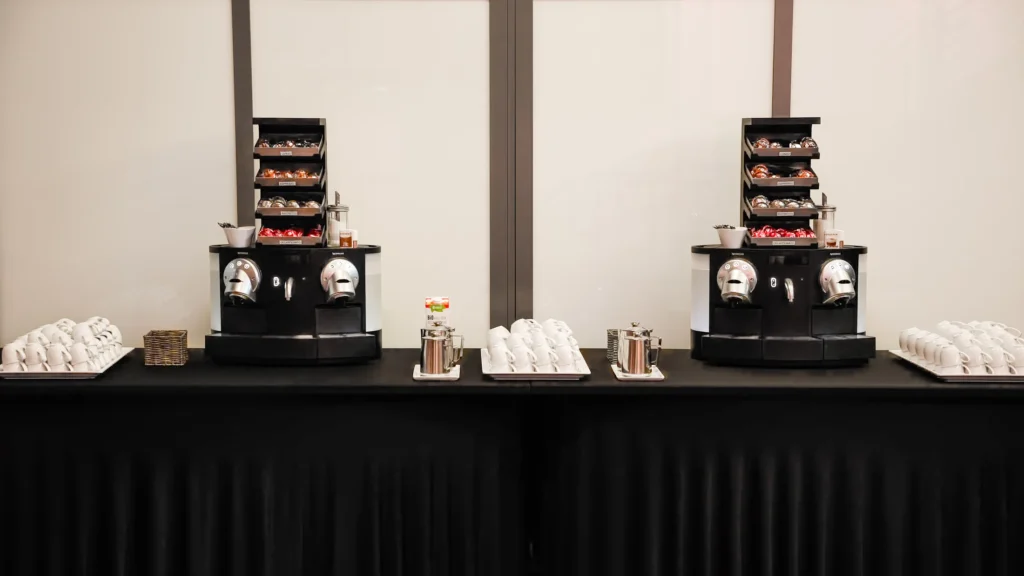

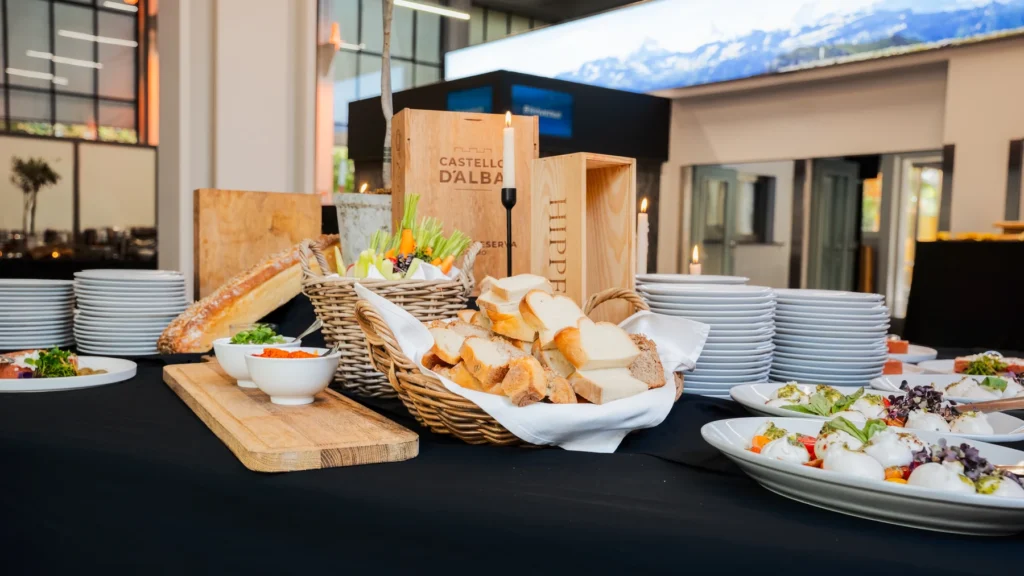


It is best to ask about dietary requirements at registration; we pass them on to ZFV.
Preparing the PI Planning
Scaled Agile divides preparation into three areas: organisation (objectives, teams and stakeholders are clear), content (business context, vision and most important features are ready) and logistics (room, technology, materials, food and drink). This timeline helps with the logistics.
- At the start of the year
Dates and venueSet all PI Plannings for the year and book the venue for each date.
- Six to eight weeks before
Room and peopleTeams and number of people, floor plan, remote locations joining online, interpreting.
- Two weeks before
ContentSlides for business context, vision and architecture, board template with iterations.
- One week before
Fine-tuningFinal number of people, dietary requirements, materials, test of the remote connection.
- On the morning of day 1
Set-upPut up the board, label the team tables, technical check with the moderator.
At the Eventforum Bern you can book the dates for a whole year in advance. We agree for each date when your team has access in the morning.
Checklist for your PI Planning
To tick off during preparation, from the date to the retrospective. Your progress stays saved in this browser.
PI Planning at the Eventforum Bern
The event hall, foyer, FabrikLounge and four workshop rooms are in the same building, and no other event takes place on your two days. The board stays up overnight, and you can book the dates for a whole year in advance.
Send the dates, number of people and number of teams via the booking enquiry. You will receive a first quote within 12 hours.
Frequently asked questions about PI Planning
How long does a PI Planning take?
Usually two days, every eight to twelve weeks. On the first day, management and product management present the business context and vision, and the teams draft their plans. On the second day, the plans are adjusted, presented and concluded with a confidence vote.
How many people do you need space for?
A Release Train usually comprises 50 to 125 people in five to twelve teams, plus Business Owners, product management and guests from other areas. Plan for seats at tables for everyone, because the teams work on laptops and with documents.
Why hold a PI Planning away from the office?
Everyone is in the same place for two days, with no meetings or phone calls in between. A large hall shows the whole board on one wall, and questions between teams can be cleared up in two minutes at the next table instead of by email.
Can a PI Planning also be hybrid?
Yes. Teams at other locations join via Microsoft Teams or Zoom. What matters is a digital copy of the board, microphones for every contribution in the plenary and a person who keeps an eye on those joining remotely.
How many rooms does a PI Planning need?
One hall for the plenary and team work, a foyer for breaks, a small room for the management review and, depending on team size, two to five group rooms for teams that need quiet.
How early should we book the venue?
It is best to set the dates of all PI Plannings for a year in one go and book them at the same time. This is possible at the Eventforum Bern: you keep each date free before the teams’ calendars fill up.
More guides
Objective, agenda with times, room and technology. For kick-offs of projects, years and programmes with many participants.
Timeline, room, programme, technology and languages. With a checklist for companies, federations and public authorities.
Theatre, classroom, banquet and U-shape seating. What they suit, how much space they need and what fire safety requires.
Last updated: October 2026. Agenda based on the Scaled Agile Framework (SAFe); the times are guide values, and the agenda and dates of your Release Train take precedence.